

Your cat is purring in the carrier on the way to the vet. You think it’s relaxed. It’s probably terrified. Purring doesn’t mean what you think it means—and understanding why your cat really vibrates could change how you read your cat’s emotional life.
Purring is just one piece of feline body language — PawsGuides decodes a closely related habit in why your cat kneads you.
The mechanics: How purring actually works
A cat’s purr comes from the larynx—the voice box—where tiny muscles contract and relax up to 150 times per second. This creates vibration in the vocal cords, producing that continuous rumbling sound. The secret to the non-stop purr lies in the hyoid bone, a small horseshoe-shaped structure that anchors the larynx. In domestic cats and other small felines, this bone is fully ossified (hardened) and flexible, allowing the larynx to vibrate continuously during both inhale and exhale. Big cats have a partially cartilaginous hyoid with an elastic ligament—structurally incompatible with continuous purring, but perfect for producing roars.
The frequency range sits between 25 and 150 Hz, though some cats push past 220 Hz. If you’ve ever had a cat whose purr sounds like a lawnmower and another whose purr is barely audible, that’s breed and individual variation—some cats are just quieter models.
Purring is semi-voluntary. Cats can suppress it, but it’s often an automatic response triggered by touch, proximity to trusted beings, or internal emotional states. They’re not always choosing to purr—sometimes the purr just happens.
Why cats purr when they’re happy (the obvious reason)
Cats purr when they’re content, being petted, or sitting in your lap. This is the bonding purr—the social glue that connects cats to their humans and to each other. Stroking a cat activates scent glands in their cheeks and paws. The purr signals: I’m comfortable, you’re good people, keep doing that thing with your hand.
Kittens start purring at about two days old while nursing, signaling to their mother that they’re feeding and alive. Adult cats keep this behavior because it works—purring near humans tends to result in food, attention, and warmth. Some researchers think purring evolved specifically to manipulate us. It’s feline marketing.
Why cats purr when they’re not happy (the counterintuitive part)

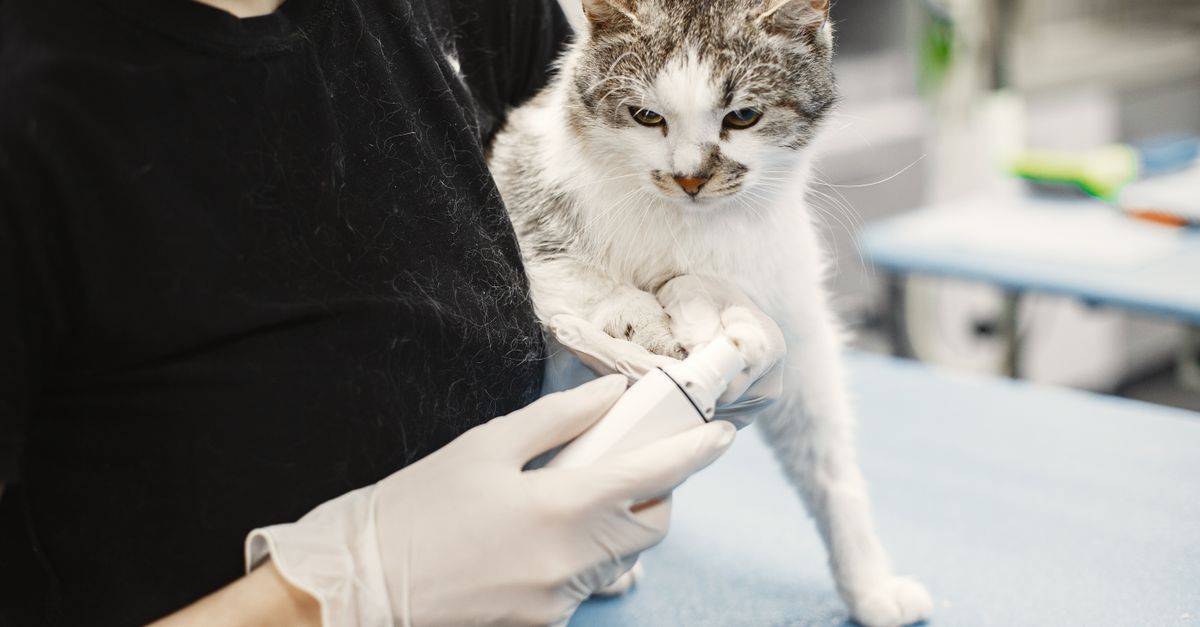
Here’s where it gets interesting. Cats also purr when they’re anxious, injured, in pain, or dying. Veterinarians report cats purring on the exam table during stressful procedures. Mother cats purr heavily during labor—not because childbirth is fun, but because purring calms them and the kittens. Some cats purr in their final moments.
This reframes everything. Purring isn’t an emotional state—it’s a coping mechanism. Research has shown that purring activates physiological calming responses: the vibrations help lower cortisol levels, stabilize respiratory rate, and may raise pain thresholds in stressed or injured cats. It’s the equivalent of humming to yourself in a dark basement, except your body chemistry actually responds.
When your cat purrs in the carrier on the way to the vet, it’s not saying “I love car rides.” It’s saying “I’m holding it together.”
How vets tell the difference
Veterinarians rely on a cluster of behavioral signals to distinguish pain-purring from contentment-purring, because the purr itself sounds identical. Post-surgical cats, cats with dental disease, and arthritic cats often purr—but they avoid direct eye contact, hold their whiskers flat or tense, show bite inhibition changes (reluctance to eat or groom), and position their body defensively (hunched, tail tucked). A content cat making eye contact and kneading? Different story. Context is everything.
The healing frequency hypothesis (now with data)
The purr frequency range—especially 25 to 50 Hz—aligns with frequencies used in human medicine to promote bone density and tissue repair. Studies on low-frequency vibration therapy show measurable effects on bone growth and swelling reduction, and cats purr right in that therapeutic window.
The evidence is still circumstantial but mounting. Indoor cats have fewer bone fractures and faster recovery rates than their activity level would predict. Purring during injury or illness is near-universal in domestic cats. The acoustic research confirms the frequency overlap isn’t coincidental—cats are hitting the same vibration range that physical therapists use on purpose.
Does this mean your cat is running an internal bone-healing protocol every time it purrs? Possibly. The hypothesis is no longer fringe speculation, but we’re not yet at the level of peer-reviewed certainty that lets vets prescribe “purr three times daily.”
What big cats can’t do
Lions, tigers, and leopards can’t purr like your housecat. The hyoid bone difference is the dividing line: big cats have a flexible, partially elastic hyoid that allows the larynx to shift position and produce low-frequency roars that carry for miles. Small cats in the Felis lineage—domestic cats, wildcats, lynxes—have a rigid hyoid that locks the larynx in place for continuous vibration but limits vocal range.
This evolutionary split happened around 11 million years ago when the cat family diverged into Pantherinae (roaring cats) and Felinae (purring cats). Your cat traded the ability to roar for a superpower that apex predators gave up: a built-in stress-regulation and possibly bone-healing tool that works 24/7.
What it means for cat owners
Stop assuming purring means happiness. Watch the rest of your cat’s body language—ears back, tail twitching, pupils dilated? That purr might be stress. Relaxed posture, slow blinks, kneading? That’s contentment.
If your cat purrs excessively or in unusual contexts (hiding, refusing food, limping), it could signal pain or illness. Purring is one data point in a bigger picture, not the whole picture.
And if your cat doesn’t purr much? That’s fine. Some cats are naturally quieter. Breed matters (Siamese cats vocalize constantly; some Bengal lines are more reserved), and individual personality matters even more. A non-purring cat isn’t defective—it’s just working with a different communication style.
FAQ
Do all cats purr?
Most do, but not all. Some cats are naturally quieter; some older or deaf cats may purr silently (you can feel the vibration but not hear it). Breed and individual genetics play a role.
Why do cats purr when you pet them?
Petting triggers sensory pleasure and activates scent glands in their cheeks and paws. The purr signals comfort and reinforces the bond between you and the cat. It’s also self-soothing—the vibration itself has measurable calming effects.
Can cats control their purr?
Purring is semi-voluntary. Cats can suppress it, but it often happens automatically when triggered by touch, stress, or contentment. Sometimes it’s reflexive rather than chosen.
Is purring always a sign of happiness?
No. Cats purr when nervous, in pain, nursing, or dying. The frequency stays the same, but the emotional context changes. Look at other body language cues to interpret mood—whisker tension, eye contact, posture.
What does a cat’s purr frequency mean?
Most purrs fall between 25 and 150 Hz. Research suggests frequencies around 25–50 Hz align with therapeutic vibration used in bone-healing protocols, though whether cats are “self-medicating” is still being studied. High or low frequency isn’t a reliable mood indicator.
Next time your cat purrs, resist the urge to translate it as “I’m happy.” The purr is just the soundtrack—the rest of the scene tells you what it means.