
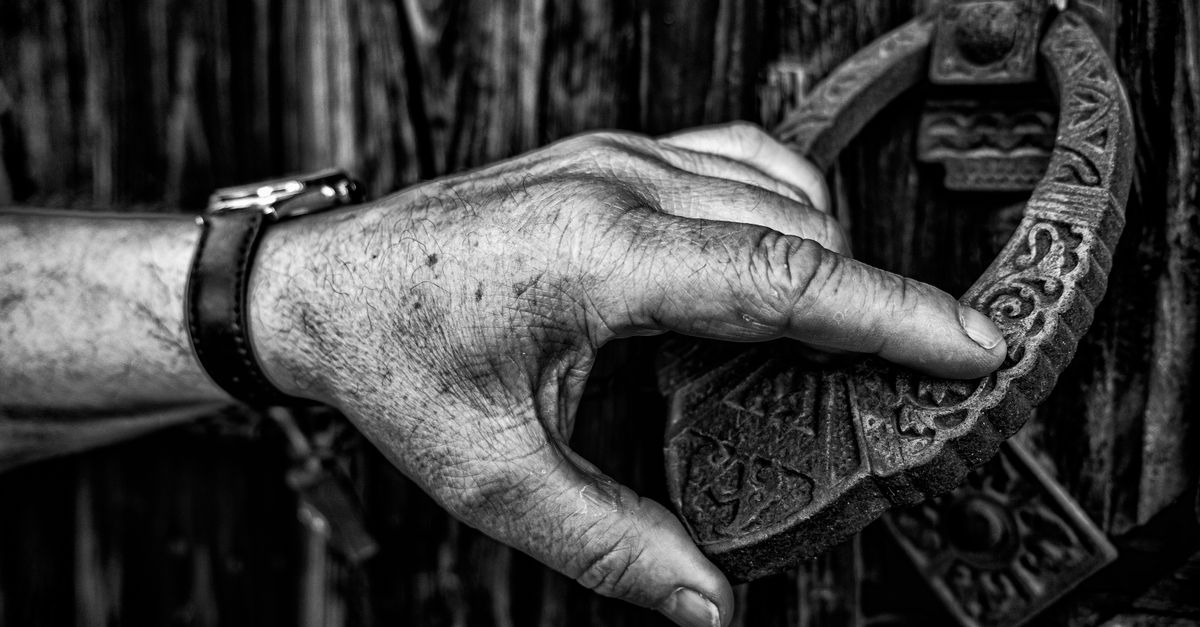
I said it out loud last week without thinking: “The flight’s on time, knock on wood.” Then I rapped my knuckles against the wooden arm of my chair. I don’t believe wood has magical properties. I know it doesn’t. But I did it anyway, and if you’ve ever done the same thing, you know exactly why.
The short answer
We touch wood for luck because the ritual reduces anxiety about stated hopes. It’s a low-cost gesture that signals we’ve “done something” to ward off a jinx—and our brains treat that action as genuine anxiety relief, whether we intellectually believe in it or not.
Where wood-touching actually comes from
Tracing knock on wood superstitions is difficult: nobody wrote down when it started. The phrase appears in English texts by the mid-1800s, but the folk practice almost certainly predates it. “Touch wood,” the British variant, shows up in records around the same time. By the early 1900s, both versions were widespread enough that people stopped questioning them.
But where did it come from? That gets messy fast.
One theory pins it to pre-Christian pagan belief: trees housed protective spirits, so touching wood invoked their help. Folklorists point to tree-reverence in Germanic, Celtic, and Scandinavian traditions as support. It’s plausible. In preindustrial Europe, trees mattered deeply—sacred groves, boundary markers, sources of heat and shelter.
Another theory goes Christian: wood represents the cross, and touching it invokes divine protection. This fits in regions where Christianity dominated and the cross held symbolic power. The ritual could have been a shorthand prayer, stripped of words and reduced to gesture.
The third theory is less romantic but maybe more honest: the ritual’s form matters more than its origin. Humans crave concrete actions when facing uncertainty. Touching something solid, making a small sound—that’s apotropaic behavior, warding off bad things. The material could have been anything. It just happened to be wood because wood was everywhere.
These theories don’t cancel each other. Cultural rituals layer and mutate. A pagan practice might persist under a Christian framework. A Christian gesture might outlive belief. The ritual survives because it works—not magically, but functionally.
Why wood, specifically?

Preindustrial life ran on wood. Homes, tools, fires, ships, furniture—wood was the most tangible, abundant material in daily life. Reaching out and touching it required zero effort. You were probably already sitting on it.
That’s changed. Most of what we knock on today isn’t solid wood—it’s particle board, laminate, plastic pretending to be wood, or nothing at all. I’ve watched people knock on their own heads when no wood was nearby, which says everything about how the ritual has decoupled from its original anchor. It’s no longer about the material. It’s about the gesture.
Other cultures have analogous rituals using different materials. In parts of the Mediterranean, people spit three times to avoid a jinx. In some Indian contexts, touching iron serves the same function. Brazilians say “toca madeira” (touch wood). Germans say “Klopf auf Holz.” The Dutch, Swedes, and Danes all have wood-touching variants. The ritual crosses borders because it solves a universal problem: what do you do when you’ve just said something hopeful and now you’re worried you’ve jinxed it?
The skeptic’s paradox

Here’s what nobody tells you about knock on wood superstitions: they’re more common in educated, secular people than anyone else. Surveys on superstitious behavior show that people who should know better still engage in these rituals—often half-seriously, sometimes ironically, but they do it. The ritual persists not despite disbelief, but because of it. When you don’t actually think wood has magic powers, there’s no cognitive cost to hedging your bets. It’s free insurance.
Psychologically, the ritual functions like a reset button. You’ve said something hopeful out loud—“I think I aced that test”—and now your brain is spinning up anxious what-ifs. Touching wood gives you a concrete action to perform, signaling that you’ve “done something” to counter the jinx. Your brain registers that action and dials down the anxiety. It’s the same reason athletes have pre-game rituals and actors say “break a leg” instead of “good luck.” The ritual doesn’t change external outcomes, but it changes you—it steadies your mind.
It’s also social. “Knock on wood” signals shared vulnerability. When you say it, you’re acknowledging that hope and uncertainty exist in the same breath, and everyone listening knows the script. It’s cultural synchronization. You’re not just managing your own anxiety—you’re participating in a centuries-old ritual that binds you to everyone else who’s ever hoped for something and immediately worried they’d jinxed it.
Why this matters
The survival of this superstition tells us something useful: rituals don’t need to be true to be functional. We live in a secular, scientifically literate age, and yet we still reach for gestures that predate the scientific method. That’s not a failure of rationality—it’s a feature of human psychology. We’re pattern-seeking creatures who crave control in uncontrollable situations. A low-cost ritual that reduces anxiety is adaptive behavior.
You don’t have to believe in tree spirits or divine intervention to touch wood. You just have to be human and occasionally hopeful.
FAQ
When did knocking on wood start?
The phrase appears in English written records by the mid-1800s, but the folk practice likely predates it by centuries. Pagan wood-reverence theories suggest origins in pre-Christian Europe, though no definitive documentation exists.
Is knocking on wood actually lucky?
Superstitions don’t work via magic, but the ritual can reduce anxiety about stated hopes. Psychologically, it functions as a “reset button” that gives your brain a concrete action to perform, which temporarily lowers worry.
Do other cultures do this?
Yes. German “Klopf auf Holz,” Brazilian “toca madeira,” and similar rituals exist across cultures. Related anti-jinx practices include spitting, touching iron, or touching fabric. The form varies; the function—warding off bad outcomes after expressing hope—is nearly universal.
Why do people still do this if they don’t believe in it?
Habit, cultural osmosis, and the fact that it costs nothing. The ritual persists because it’s useful, not because people believe wood has magical properties. It’s a low-stakes anxiety hack that works whether you take it seriously or not.
The next time you knock on wood, you’re not appealing to ancient spirits or invoking divine favor. You’re just giving your brain permission to hope without spiraling. That’s a pretty good trick for a gesture that costs nothing but a single tap.