
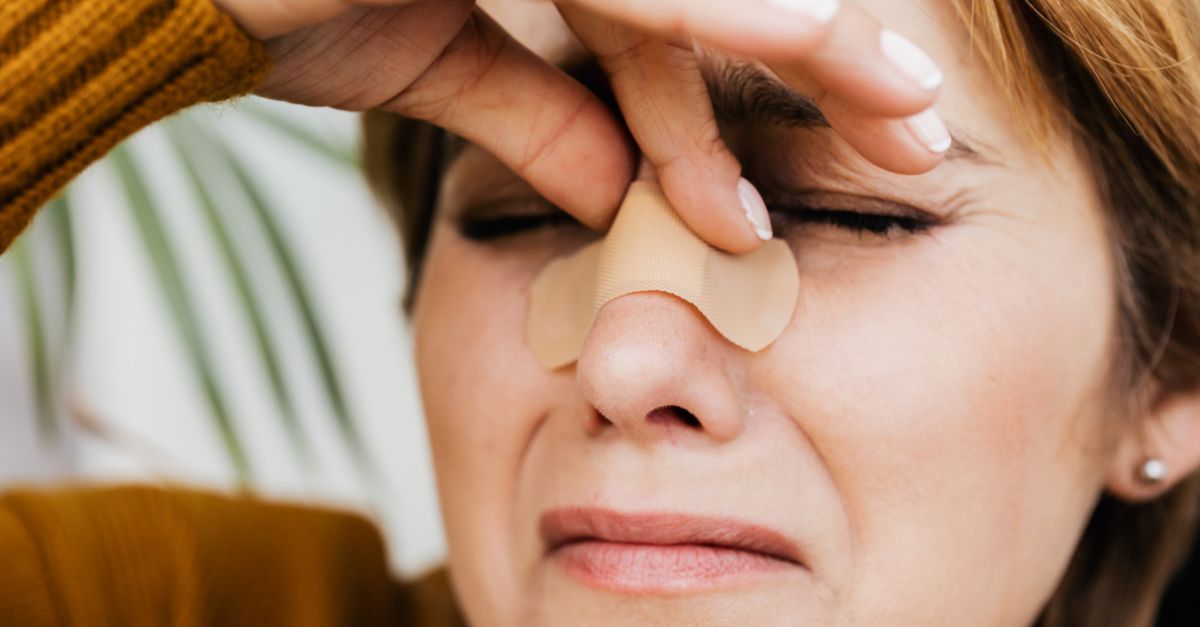
Your grandmother might have told you that an itchy nose means a visitor is coming. Or that someone’s talking about you. Or that money’s on its way. Which one’s true? All of them, depending on where your grandmother grew up, and also none of them, depending on whether you trust biology over folklore.
The short answer
Medically, an itchy nose usually means allergies, dry indoor air, or irritants like dust or fragrance. Culturally, nose itching superstitions exist across the world, but they contradict each other—though no ethnographic research actually pins down where these regional splits originate. Same itch, different story.
Why your nose itches more than you think it should
The nose is covered in nerve endings—one of the highest concentrations on the human body. It has to be. Your nose is the frontline air filter, the first responder to every particle you breathe. More nerves mean better detection, which also means you feel everything. A speck of dust that would go unnoticed on your forearm announces itself loudly when it lands on nasal tissue.
This is useful when the air contains actual threats. It’s less useful when the threat is just low humidity. Winter heating systems and air conditioning can drop indoor humidity significantly—dry nasal mucosa itches faster than skin elsewhere because it’s designed to stay moist. You scratch. It dries more. Welcome to January.
Allergies are the other big culprit. Allergic rhinitis affects a substantial portion of the population—enough that if your nose itches seasonally, you’re in large company. Itching is often the first symptom, before the sneezing or congestion kicks in. Your immune system spots an allergen, floods the area with histamines, and your nose starts the alarm.
Here’s a quick diagnostic: if the itching is year-round but worse indoors in winter, it’s probably dry air. If it spikes in spring or after you visit a friend with cats, it’s allergies.
But if you notice any of these red flags, skip the home remedies and see a doctor: itching confined to one side that lasts more than two weeks, itching accompanied by nasal discharge or visible growths, nosebleeds, or localized pain or swelling. These can signal structural issues, polyps, or skin conditions that won’t resolve on their own.
Why we turned an itch into an omen

Humans don’t like randomness. We especially don’t like randomness happening on our own bodies. So we did what we always do: we made up a story.
The nose itching superstition shows up independently across cultures, which suggests we all noticed the same thing—noses itch a lot—and all decided it must mean something. The nose is conspicuous. It’s on your face. It itches just often enough to feel patterned, but not so often that you can dismiss it.
But here’s the weird part: the stories don’t agree. In some Western contexts, an itchy nose means someone’s coming to visit, or that someone’s talking about you. In parts of Asia, an itchy nose signals money arriving or good news. Same sensation, opposite meanings. That should tell you something: the itch is real, the interpretation is regional variation passed down as oral tradition, not documented belief systems with scholarly sources.
The reason folklore latched onto the nose—and not, say, your elbow—is that nerve-dense body parts get more narrative attention. We developed superstitions around other common physical sensations for the same reason. High-sensation areas feel meaningful because they’re loud. The stories came later, as a way to organize all that neural noise into something we could act on.
The superstition makes itself true (sort of)

Once you hear that an itchy nose means something, your brain starts keeping score. This isn’t magical thinking—it’s a documented psychological effect called attention bias. Your reticular activating system, the part of your brain that decides what’s worth noticing, starts flagging every nose itch. Before, you might have scratched absentmindedly and moved on. Now you notice.
And then—because life is full of coincidences and people do visit sometimes and you do receive money occasionally—one day your nose itches and a friend shows up unannounced. Confirmation. The superstition feels validated. You remember that instance and forget the seventeen other times your nose itched and nothing happened.
The itch isn’t fake. The pattern is. But the pattern feels real because your attention is now shaped by the story. This is how nose itching superstitions survive for centuries despite having no biological mechanism. They’re not true, but they’re not entirely wrong either—they’re just very good at making you pay attention.
What to do about it
If your nose itches constantly, you probably don’t need a visitor or a windfall—you need a humidifier. Run one in winter if you’re indoors with heating. It won’t cure allergies, but it’ll stop your mucosa from drying out.
If the itching is seasonal or tied to specific environments, you’re likely dealing with allergens. An allergist can run tests and narrow it down. Over-the-counter antihistamines may help in the short term, but identifying the specific trigger is more useful than guessing.
If the itching is persistent, one-sided, or comes with other symptoms—bleeding, pain, changes in smell—skip the folklore and see a doctor. Superstitions are fun until they delay actual medical care.
FAQ
What does an itchy nose mean spiritually?
It depends entirely on your cultural background and what stories were handed down in your family. Some Western contexts interpret it as a visitor coming or gossip circulating. Other traditions link it to incoming money or good fortune. There’s no universal spiritual meaning—just regional folklore filling the same narrative gap.
Can stress make your nose itch?
Indirectly, yes. Stress can worsen existing allergies and skin conditions, and it can make you hyper-aware of body sensations you’d normally ignore. The itch itself isn’t caused by stress, but stress amplifies how much it bothers you.
Is an itchy nose a sign I’m getting sick?
Not usually. Allergies and dry air are far more common than infection. If the itch comes with fever, congestion that worsens, or discolored mucus, then maybe—but the itch alone isn’t a reliable signal.
Your nose itches because it’s doing its job, or because the air is terrible, or because your immune system is overreacting to tree sex. The stories we tell about it are just that—stories. But they’re also a reminder that humans have always tried to make sense of the static our bodies produce, and sometimes the sense we make is just a good narrative dressed up as prophecy.