
The word knight has five letters doing absolutely nothing. Or at least, that’s how it looks if you pronounce it the way we do now. But those letters weren’t always quiet. The “k” was once hard and audible, the “gh” made a guttural scraping sound (think the Scottish loch), and the “i” sounded like “ee.” Somewhere between the 1300s and today, English speakers gradually stopped pronouncing those sounds—but the spelling stuck around like a guest who didn’t get the hint.
The short answer
Silent letters are remnants of older pronunciations that faded from speech faster than they disappeared from writing. They come from three main sources: sounds that English speakers eventually stopped pronouncing (like the “k” in knight), French and Latin spellings imported during the Norman Conquest and Renaissance that were never pronounced in English to begin with (like the “b” in debt), and regional variation—what’s silent in one accent is often audible in another.
The sounds went silent, not the letters
Here’s the reframe: the letters aren’t silent. The sounds they represented went quiet, and the letters stayed put as historical markers.
Take knight, gnaw, and psychology. These words come from different language families, but they share a pattern: English speakers used to pronounce the initial consonant clusters (“kn,” “gn,” “ps”), and over centuries, those sounds dropped out of everyday speech. Between roughly 1350 and 1700, the Great Vowel Shift reshaped how English vowels were pronounced, and other sound changes simplified consonant clusters that felt awkward or unnecessary.
But why did “kn-” drop while “sk-” survived? The answer lies in phonotactic constraints—the rules that govern which sound combinations a language allows. Initial “kn-” required speakers to articulate two voiceless stops in immediate succession, a combination that became increasingly difficult as English pronunciation shifted. Consonant clusters that violated emerging patterns of what “sounded English” were simplified, while combinations that fit existing templates (like “sk-,” “st-,” “sp-”) remained stable. By the time English spelling was standardized through printing presses and early dictionaries in the 1600s–1800s, the sounds were already gone—but the letters had been locked in.
Germanic languages contributed the “kn” pattern (knife, know, knock—all once pronounced with the “k”). Greek gave us the “ps” and “pn” clusters (psychology, pneumonia). These weren’t spelling errors. They were accurate records of how the words sounded centuries ago.
How widespread is this problem?
Silent letters aren’t rare curiosities—they’re embedded throughout common English vocabulary. The major patterns include initial consonant clusters (kn-, gn-, wr-, ps-, pn-), medial and final silent letters (the “b” in lamb, debt, subtle; the “l” in walk, talk, folk; the “gh” in night, daughter, though), and borrowed silent letters from French (ballet, depot, rapport) where final consonants often go unpronounced.
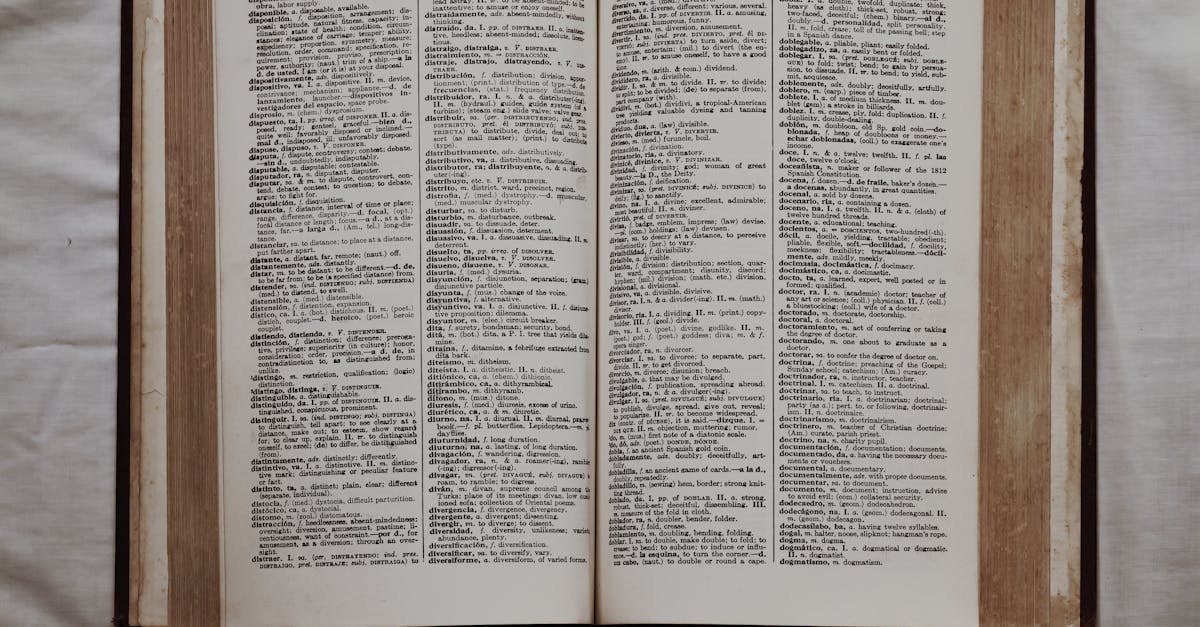
According to Merriam-Webster, English inherited silent letters from multiple language families, and the pattern affects hundreds of common words. Walk through any page of the dictionary and you’ll find them: honest, hour, and honor (silent “h”); listen, castle, and whistle (silent “t”); salmon, calm, and palm (silent “l”). They’re not edge cases. They’re structural.
The French left their fingerprints everywhere

Then there’s the Norman Conquest. In 1066, French-speaking Normans took over England, and for the next few hundred years, French was the language of the court, law, and administration. This influx brought substantial French linguistic influence: French-origin words entered English in large numbers, many carrying French spelling conventions along for the ride.
Words like doubt (from French doute, rooted in Latin dubitare) and receipt (from recette, rooted in Latin recepta) imported silent letters that matched their French originals. The “b” in doubt and the “p” in receipt were never pronounced by English speakers—they were visual signals of the words’ Latin roots, added by scribes who wanted English to look more etymologically “correct.”
This also explains why debt has a “b” (to match Latin debitum) even though Middle English speakers borrowed it from French as dette, which had no “b” at all. Scribes in the Renaissance added it back in as a kind of spelling repair, a nod to the word’s distant ancestor. The Oxford English Dictionary documents these etymological additions extensively, showing how scribes and early printers deliberately inserted silent letters to align English spelling with classical roots.
Silent letters do actual work
If silent letters are such a nuisance, why didn’t English just drop them?
Partly because spelling reform is nearly impossible once a language has mass literacy and standardized printing. Noah Webster tried in American English (he’s why we write color instead of colour), and George Bernard Shaw famously advocated for a complete phonetic overhaul, but neither could dislodge letters that had been printed in millions of books and taught in schools for generations.
But there’s a deeper argument: silent letters may contain information that skilled readers use.
Readers don’t sound out words letter by letter. We recognize them as whole visual patterns, and some linguists and educators argue that silent letters help us instantly identify word families and roots. The “g” in sign is silent, but it becomes audible in signal and signature. That visual connection helps readers see the morphological relationship at a glance. Remove it, and you’ve potentially erased a useful breadcrumb.
The same pattern appears in psychology and psyche, or debt and debit. The silent letters aren’t necessarily dead weight—they’re potential anchors that tie related words together visually, even when pronunciation has drifted.
That said, this benefit applies mainly to readers who already know the word families. For beginning readers and spellers, silent letters create well-documented obstacles. The tension between supporting morphological awareness in skilled readers and creating barriers for learners remains unresolved, which is why spelling reformers keep trying—and keep failing.
“Silent” depends on who’s speaking

Here’s the part most articles skip: silent letters aren’t universally silent.
Millions of English speakers pronounce the “t” in often. In British English, the “h” in herb is audible; in American English, it’s not. In some Irish and Scottish accents, the “gh” in night is a guttural sound borrowed from Gaelic. In parts of the American South, the “l” in folk gets pronounced. These variations reveal something important: what we call “silent” is really just a description of prestige or standard pronunciation—BBC English, NPR English—not an absolute rule.
Cambridge Dictionary and other reference sources document these pronunciation variations, showing that what counts as “correct” often depends on which variety of English is treated as standard. The letters aren’t the problem. The assumption that there’s one right way to pronounce them is.
That means silent letters are also a window into how English refuses to stay still. The language didn’t finish evolving when the printing press locked spelling in place. Pronunciation kept shifting, region by region, speaker by speaker, and the tension between sound and spelling is part of what makes English simultaneously maddening and absurdly flexible.
The part where English is a fossil record
If you squint, English spelling starts to look less like a mistake and more like a linguistic geological survey. Silent letters mark the layers: the Germanic base, the Norman French overlay, the Renaissance Latin corrections, the regional and social variations that never got ironed out.
Other European languages went through similar shifts—French, Spanish, and Italian all have silent letters and spelling quirks—but English absorbed influences from so many sources at so many different times that the contradictions are more visible. We didn’t standardize and then borrow. We borrowed constantly, from everyone, and then tried to standardize anyway.
The result is a written language that carries its entire history on its face. Knight is a time capsule. So is psychology. So is debt. You’re not reading mistakes. You’re reading evidence of every linguistic collision that shaped modern English—and those collisions haven’t stopped.