
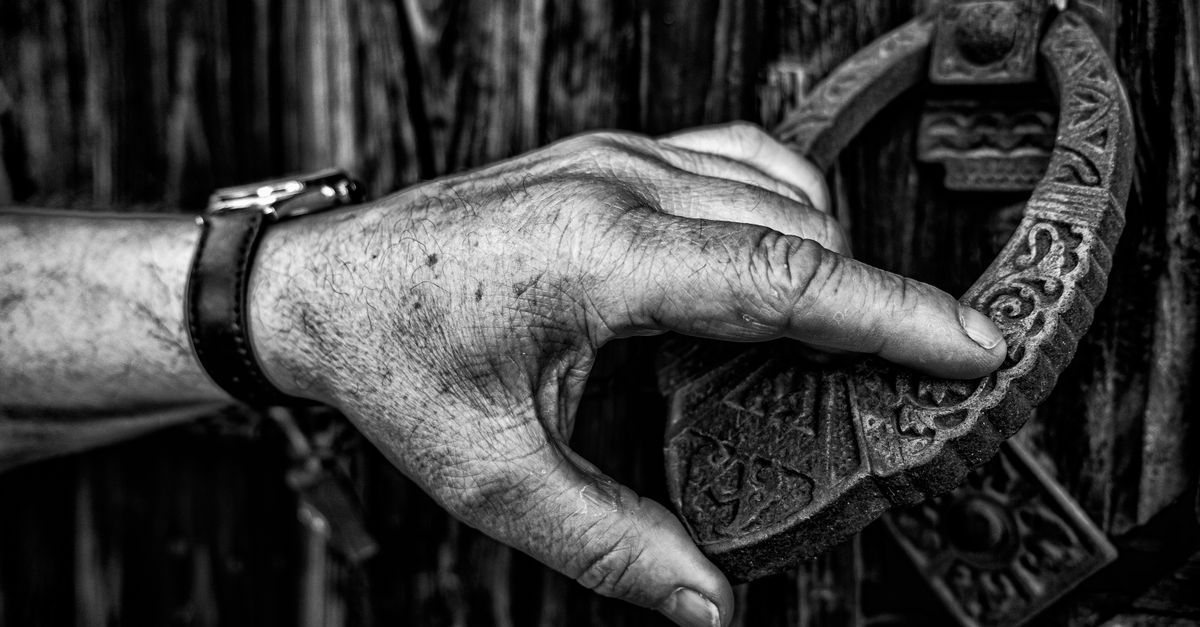
I just said it: “I haven’t gotten sick all winter.” And before the sentence even finished, my knuckles were already tapping the wooden desk. I don’t believe wood has magical properties. I know tannins and lignin can’t alter probability. And yet.
You’ve done it too. Everyone has. The moment you tempt fate with optimism, your hand searches for the nearest wooden surface. Here’s what’s actually happening in your brain—and why this particular superstition has outlasted centuries of evidence that it’s completely meaningless.
The short answer
People knock on wood because the ritual reduces anxiety in the face of uncertainty, and that reduction feels real even when the logic doesn’t hold. The gesture triggers a sense of control in situations where we have none, and our brains reward that feeling regardless of whether the protection is actual or imagined.
Your brain on superstition
The interesting part isn’t the folklore—it’s the neuroscience. When you knock on wood, your anterior cingulate cortex (the brain region associated with anxiety and error detection) shows measurably less activity. You physically calm down. Research indexed in PubMed shows that people who performed superstitious rituals before high-stakes tasks—athletes bouncing a ball three times, students carrying a lucky charm—showed reduced anxiety and improved performance on motor and cognitive tests.
Not because the ritual worked magically. Because the ritual reduced performance anxiety, which meant steadier hands and clearer thinking. The superstition became a self-fulfilling prophecy, just not in the way believers think.
Here’s the contradiction that makes this stick: you don’t have to believe in magic for the ritual to work on your nervous system. Skeptics experience the same anxiety reduction. Even people who intellectually reject superstition will still avoid “tempting fate” when the stakes feel high. Knock on wood, throw salt, cross your fingers. The gestures persist because they feel like taking action when you’re otherwise helpless. Which is, functionally, what they are—coping mechanisms for managing anxiety in the face of uncertainty.
Brief vs. elaborate: why ritual complexity matters
Not all superstitious gestures work the same way. A quick knock on wood (two seconds, done) operates differently in your brain than an elaborate pre-game ritual with fifteen specific steps in a specific order.
Brief rituals like knocking on wood function as quick interrupts—momentary reassurance that breaks a spiral of anxious thoughts. You perform the gesture, experience a flicker of relief, and move on. The benefit comes from disruption, not depth.
Elaborate rituals, by contrast, can slide into compulsive territory. Athletes who must perform a thirty-step sequence before every competition aren’t just managing anxiety—they’re potentially feeding it. The ritual becomes load-bearing. Skip one step and the anxiety floods back worse than before. What started as a confidence boost becomes a trap.
The specificity matters too. If you’re only calmed by knocking on that particular wooden desk, you’ve handed control to an object instead of reclaiming it. The ritual stops serving you and starts ruling you.
Who reaches for superstition—and when
Not everyone knocks on wood with the same frequency or fervor. Personality research published in academic journals shows clear patterns: people higher in neuroticism and those with an external locus of control (the belief that outside forces, not personal action, determine outcomes) rely more heavily on superstitious rituals under stress.
Education level doesn’t eliminate the behavior—it just changes how people frame it. Highly educated skeptics still knock on wood; they just feel sheepish about it afterward and rationalize it as “just a saying.” The ritual persists across demographics because the underlying psychology (uncertainty makes humans uncomfortable, action relieves discomfort) is universal.
Cultural background also shapes which rituals feel “natural.” Someone raised in a tradition that emphasizes protective gestures will reach for them more readily than someone from a culture that emphasizes stoicism or fatalism. But the need for some form of psychological self-soothing under uncertainty shows up everywhere.
Stressful contexts amplify the behavior. Job interviews, medical tests, high-stakes competitions—situations where the outcome matters and you can’t control it directly. That’s when even the most rational people start looking for wood to knock.
Where it came from (and why that matters less than you’d think)

The phrase “touch wood” appears in British writing by the 1690s, already casual enough to need no explanation. By the 1800s, it was common across British literature. The American variant “knock on wood” shows up in print by the early 1900s, primarily in American periodicals. The two phrases likely evolved in parallel rather than one copying the other.
The why behind the gesture is murkier and depends on which historical thread you pull. Pre-Christian Germanic and Celtic folklore describes tree-touching rituals—crossing through trees for protection, knocking on wood to summon benevolent spirits or ward off malevolent ones, touching trunks for strength. Trees were sacred, alive with power. Touching them transferred some of that protection.
The Christian theory is that the gesture mimicked touching or crossing oneself, invoking the wooden cross as protection. Plausible, but not definitively documented. Likely both traditions fed into what eventually became a casual, secularized reflex.
But here’s what’s more interesting than the origin story: nearly every culture has a functional equivalent, as documented across anthropological research. Mediterranean cultures throw salt over the left shoulder. Hindu and Jewish traditions use red strings. Various cultures spit (symbolically or literally) to ward off bad luck. The Irish touch iron. The specific material changes, but the psychological mechanic is universal—perform a small ritual, feel slightly more in control. That’s not coincidence. That’s how human brains work under uncertainty.
What wood you’re knocking doesn’t matter

Brass doorknobs work. Plastic laminate works. Plywood, hardwood, particleboard—all psychologically identical. There’s no documented “wood hierarchy” in traditional folklore. The gesture is what carries the comfort, not the lignin content.
I’ve watched people in fully modern offices knock on their desks (veneer over MDF) and look briefly sheepish. They know it’s irrational. They did it anyway. That sheepishness is the recognition that the ritual served its purpose: for a half-second, they felt like they’d done something.
When the ritual stops helping
Here’s the line worth watching: when the superstition shifts from occasional comfort to constant crutch.
If you knock on wood once after saying something optimistic and then go about your day—fine. Harmless. Possibly even helpful if it settles your nerves.
If you can’t make a decision without knocking on wood first, that’s different. If you find yourself unable to send an important email, attend a meeting, or make a choice until you’ve performed the ritual, you’ve crossed from superstition into avoidance. The ritual isn’t reducing anxiety anymore—it’s becoming the source of it.
Compulsive superstitious behavior can show up as elaborate sequences that must be performed perfectly, attachment to specific “lucky” objects without which you feel helpless, or constant scanning for omens and signs before taking any action. At that point, you’ve outsourced your sense of agency to forces outside yourself. The ritual that was supposed to give you control has taken it away instead.
Occasional knocking on wood is a quirk. Inability to function without it is worth examining—possibly with a therapist familiar with anxiety disorders and magical thinking patterns.
The generational shift (and why it’s stickier than ever)
Younger users type “knock on wood” or drop a 🤞 emoji in texts with zero access to actual wood. They’re meta about the meaninglessness—and that self-awareness hasn’t killed the habit. If anything, it’s made it more viral. The phrase has become a verbal tic, a way to acknowledge you’re being optimistic in a world that punishes optimism. You’re not invoking tree spirits. You’re signaling awareness that good luck is fragile.
Which, if you think about it, is exactly what the original ritual was doing. Just faster, and with emojis.
FAQ
When did knocking on wood actually start?
The documented phrase “touch wood” appears in British sources by the 1690s; “knock on wood” emerged in American use by the early 1900s. The underlying rituals (touching trees for protection) date back to pre-Christian European folklore, documented in Germanic and Celtic traditions.
Does knocking on wood really work?
No—but it does reduce anxiety in the person doing it, which is a real psychological benefit. Studies show that superstitious rituals improve performance under stress not through magic, but by calming your nervous system enough to think clearly.
What’s the difference between “knock on wood” and “touch wood”?
“Touch wood” is primarily British; “knock on wood” is American. Both likely emerged from similar folk roots in parallel rather than one deriving from the other.
Do other cultures do this?
Yes. Throwing salt, wearing red strings, touching iron, spitting to ward off bad luck—nearly every culture has a version of this. The specific gesture changes, but the psychology (asserting control in the face of uncertainty) is universal.
When does knocking on wood become a problem?
When the ritual shifts from occasional comfort to constant requirement. If you can’t make decisions or function without performing the superstition, or if you’ve developed elaborate sequences that must be executed perfectly, the behavior has crossed into compulsive territory worth examining.
The next time your knuckles reflexively tap wood after saying something optimistic, you’re not being irrational. You’re being human. Under uncertainty, feeling like you’ve done something—even something logically pointless—matters. It steadies you. Just watch the line between comfort and compulsion. The ritual should serve you, not the other way around.