
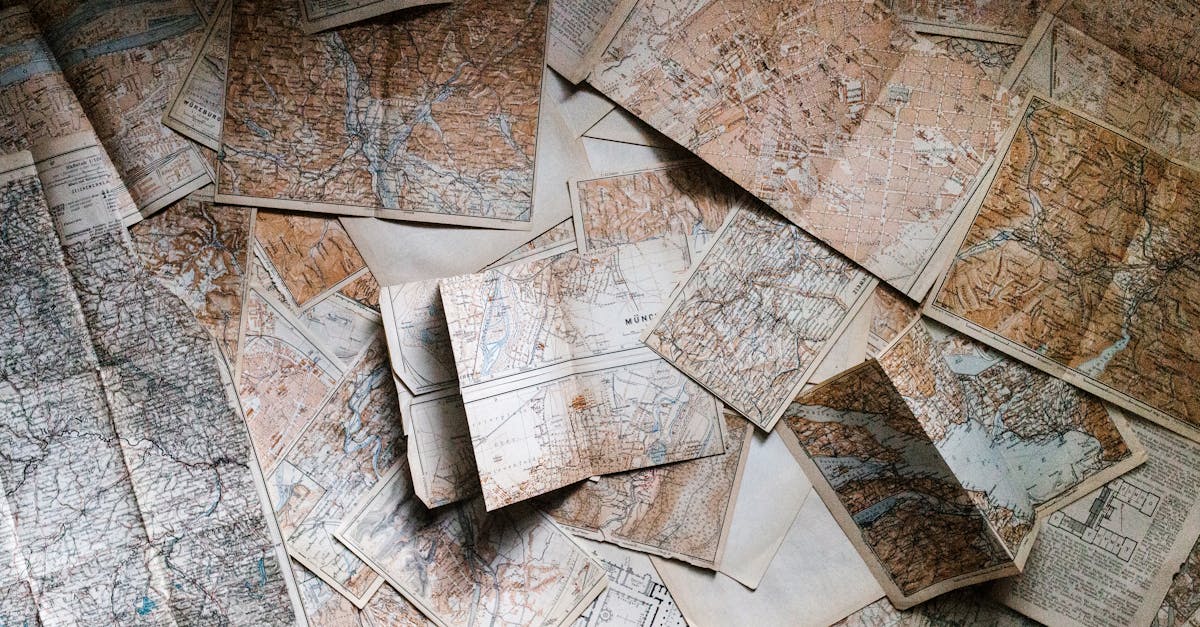
Place names are where history gets careless. Some were meant as insults. Some were spelling mistakes that nobody bothered to fix. Some were private jokes that calcified into law. And some were powerful acts of erasure—the moment one group’s language vanished and another’s took root.
This is for anyone who’s ever looked at a map and thought “wait, why is that called that?” The answer is usually weirder than you’d expect. These aren’t just random syllables—they’re accidents, arguments, and colonial shortcuts frozen into street signs. Here’s what your town’s name is actually trying to tell you.
1. Llanfairpwllgwyngyllgogerychwyrndrobwllllantysiliogogogoch, Wales — The Victorian Marketing Stunt
You know this one. The longest place name in the UK—58 letters—sounds impossibly ancient, like it’s been carved into Welsh hillsides since the druids. Except it hasn’t. The full name was deliberately created in the 1860s as a tourism stunt to attract Victorian railway travelers. It translates to “Church of Mary in a hollow of white hazel near a rapid whirlpool near a red cave of the church of St. Tysilio,” which is less a name and more a complete sentence. The village was just called Llanfairpwllgwyngyll before that—still unpronounceable to English speakers, but not ridiculous. What feels ancient is sometimes just clever marketing from 160 years ago. The town still sells merch based on the gag.
2. Hell, Michigan — Named Out of Spite (Maybe)
The story goes like this: in the 1830s, settler George Reeves was asked what to call the new settlement. He allegedly replied, “I don’t care, you can name it Hell for all I care.” And they did. The town leaned into it. You can get married in Hell. You can send postcards from Hell. The municipal website sells “Hell freezes over” jokes every winter. The origin story is probably true—there’s enough documentation to support it—but like most spite-based decisions, nobody involved expected it to stick for two centuries. There’s an alternate theory involving German settlers mispronouncing a word, but the spite version is more fun and also more consistent with how people actually name things when they’re annoyed.
3. Manhattan — The Name That Survived the Sale
Manhattan comes from the Lenape word manaháhtaan, meaning “island of many hills.” The Dutch bought it from the Lenape in 1626 for 60 guilders’ worth of goods—a transaction that’s been mythologized as “sold for $24,” which isn’t quite accurate and also obscures the real point. The deal was more complex, the Lenape didn’t think they were selling permanent ownership, and the price has been inflated for drama. But here’s the part that matters: the Lenape name stuck. Most indigenous place names got erased or mangled beyond recognition during colonization, but this one persisted through three different governments. The naming history here is a reminder of whose voices made it onto the official map—and whose didn’t.
4. Chicken, Alaska — Too Drunk to Spell “Ptarmigan”

This is the platonic ideal of an accidental place name. Miners in Alaska wanted to name their settlement after the ptarmigan, a local bird they kept calling “chickens” because it was easier. When it came time to make it official, someone pointed out that “ptarmigan” was hard to spell, especially after a long shift. The story—documented in Alaska Geographic records—is that a miner said “nobody can spell ptarmigan when they’re drunk,” and the name was changed to Chicken. It stuck. The town now has a population of about 17 and an airport code of CKN. This is what happens when bureaucracy meets apathy and a little bit of honesty about spelling skills.
5. Mississippi — Three Languages, One River, and How Sounds Actually Break
The name “Mississippi” comes from the Ojibwe misi-ziibi, meaning “great river.” French explorers heard it, wrote it down as Missisippi, and then English settlers took the French version and adjusted the spelling again. Each layer of translation shifted the sound, the spelling, and the meaning just slightly. The current version isn’t what the Ojibwe originally said—it’s a phonetic game of telephone that happened over 300 years.
Here’s what actually happens during that game. When speakers of one language try to write down sounds from another language they don’t speak, they default to the closest phonetic matches in their own writing system. The Ojibwe misi-ziibi has sounds that don’t map cleanly onto French phonetics—the doubled i and the b sound get approximated, not preserved. French scribes heard something close to “Missisippi” and wrote that. English mapmakers inherited the French spelling and added another s for reasons that are now lost to history. The U.S. Geological Survey’s Geographic Names Information System tracks these transliteration chains across thousands of American place names, most of which follow the same pattern: indigenous name → colonial phonetic approximation → bureaucratic standardization → permanence.
This is how place name origins work when languages collide: the original gets filtered through whoever writes it down next, and what survives is a compromise nobody planned. The name stuck because settlers needed to call it something, and “great river” was accurate enough that nobody fought it.
6. Intercourse, Pennsylvania — A Word That Meant Something Else
Intercourse, Pennsylvania, was originally called Cross Keys, after a local tavern. In 1814, it was renamed “Intercourse,” and the town has been fielding questions ever since. The most likely explanation—according to the Intercourse Historical Society and Smithsonian coverage—is that “intercourse” meant “interaction” or “commerce” at the time, referring to the crossroads where communities met to trade. It’s also possible the name came from a mispronunciation of “Enter Course,” a now-obsolete term for a racetrack entrance. There’s genuine historical debate, which means nobody really knows. What’s certain is that the modern meaning of “intercourse” has made this a popular joke, a tourist attraction, and a case study in how language shifts faster than maps do. The name was innocent when it was chosen. Language caught up and made it weird.
7. Boring, Oregon — Named After a Surveyor, Not a Feeling
Boring, Oregon, is named after William H. Boring, a railroad surveyor who worked in the area in the early 1900s. Not the adjective. Not a commentary on the town’s nightlife. Just a guy’s last name. The town has fully embraced the irony—its unofficial slogan is “Keep Boring Weird,” and it has a sister-city relationship with Dull, Scotland, and Bland, Australia. The name stuck because nobody thought it was worth changing, and now it’s a minor internet phenomenon and a good reminder that city names are often just… someone’s name. No deeper meaning. No cultural symbolism. Just a bureaucrat writing down “Boring” on a form because that’s who surveyed the land.
8. Lake Tahoe — A Mispronunciation That Replaced the Original
Lake Tahoe comes from the Washoe word dáʔaw, meaning “the lake.” English-speaking settlers heard it, mispronounced it as “Tahoe,” and the mispronunciation became the official name. The original Washoe pronunciation is now mostly lost in common usage, even though the Washoe Tribe still uses it. This is one of the quieter acts of linguistic erasure—nobody set out to destroy the name, but phonetic transcription by people who didn’t speak the language turned dáʔaw into something else entirely. The story repeats across North America: an indigenous name survives in distorted form, the mapmakers move on, and the original meaning fades. It’s not dramatic. It’s just what happens when the people writing the maps don’t speak the language of the people who named the place first.
What Survives and What Gets Erased
The Geographic Names Information System, maintained by the U.S. Geological Survey, catalogs over two million place names in the United States. Many retain indigenous roots—Mississippi, Manhattan, Chicago, Kentucky—but the majority reflect European naming patterns imposed during colonization. What survived depended less on which names were “better” and more on which settlers bothered to ask what a place was already called. Some indigenous names persisted because French or English mapmakers phonetically transcribed them. Others vanished entirely, replaced by saints, monarchs, or the surnames of railroad surveyors nobody remembers.
The pattern isn’t unique to the Americas. British place names layer Old English, Norse, Latin, and Celtic roots depending on who controlled the land when writing systems arrived. The difference is timescale: those layers accumulated over millennia. In the Americas, the replacement happened in decades.
The Names That Got Taken Back
Place name politics didn’t stop in 1900. Over the past fifty years, governments have reclaimed names as acts of sovereignty. Peking became Beijing in 1949 when the People’s Republic of China standardized Pinyin romanization. Bombay became Mumbai in 1995, reverting to the Marathi name after centuries of Portuguese and British colonial use. Burma became Myanmar in 1989, a shift the military government framed as decolonization, though the name remains contested. These aren’t just spelling updates—they’re assertions of who gets to define a place. The Library of Congress tracks these shifts in its geographic authority files, each change reflecting a moment when political power and linguistic identity intersected on a map.
The renaming wave isn’t over. Cities and landmarks are still being renamed to reflect indigenous languages, remove colonial figures, or correct historical erasures. The process is slow, politically complicated, and ongoing. What you call a place has always mattered. It still does.
How we ranked these
We picked place names with documented, weird origin stories—prioritizing examples that reveal something about how naming actually works (accidents, colonial shortcuts, linguistic drift, deliberate jokes). We skipped names with disputed origins unless the dispute itself was interesting. Sources include the USGS Geographic Names Information System, Smithsonian historical records, and regional historical societies.
Frequently asked questions
Where do place names come from?
Place names come from indigenous languages, colonizers, historical figures, geographic features, or—more often than you’d think—mistakes that became official because nobody bothered to fix them. Some are translations, some are mishearings, and some are just someone’s last name.
Why do some cities have weird names?
Most weird city names are the result of colonial shortcuts, phonetic mishearing, spelling mistakes that calcified into law, or names that were meant as jokes but survived long enough to become official. Bureaucracy moves slowly, and renaming a place is politically complicated.
What do city name origins tell us?
City name origins reveal who had power when the name was written down. They show which languages survived contact with colonizers, which names were erased, and which mistakes or jokes became permanent because nobody with authority cared enough to change them.
Are place names still being changed today?
Yes. Governments continue to reclaim indigenous names, remove colonial figures, and reassert linguistic sovereignty through renaming. Recent examples include Mumbai (formerly Bombay), Beijing (formerly Peking), and ongoing efforts to restore indigenous place names across North America and Australia.
If you liked these place name stories, check out why accents change by geography—it’s the same story at a different scale. Language moves. Names just move slower.