

Everything you’ve been told about how to hold a teacup is probably wrong. The most famous “rule” of afternoon tea etiquette—raising your pinky while sipping—is actually a mark of bad breeding, according to the people who invented these rules in the first place. Which means most of us have been signaling the exact opposite of what we thought.
The short answer
Afternoon tea etiquette is a code language that evolved to signal social belonging. The strange rules—pinky down, milk after tea, forks from outside in—started as functional solutions (prevent spills, protect china, avoid confusion) and became class markers. Many persist today not because they’re enforced, but because they still work as quiet politeness.
The pinky myth runs backwards
Here’s the thing about the raised pinky: it was never proper. According to Debrett’s, the definitive British etiquette authority, raising your pinky while holding a teacup was historically considered affected—something lower classes did while trying to look upper-class. The pinky naturally lifts a bit when you grip the handle correctly (thumb and index finger on the handle, middle finger supporting from below). That’s fine. Deliberately sticking it out is what signals you don’t actually know the rules.
The Emily Post Institute agrees: the raised pinky “has no basis in proper etiquette” and likely originated as theater, not practice. It’s a perfect example of folklore becoming “common knowledge” through repetition. The myth spread so thoroughly that now the wrong thing is what most people think is right. Etiquette experts spend a lot of time correcting this one.
Tea etiquette is functional first, fancy second
Most afternoon tea rules exist because they solve a real problem. Then they became signals.
Take the napkin: it goes on your lap because that’s where crumbs fall. If you get up mid-tea, you place it on your seat (not the table) to signal you’re coming back. Debrett’s notes this as one of the universal signals that transcends national etiquette differences—no one has to ask if you’re done.
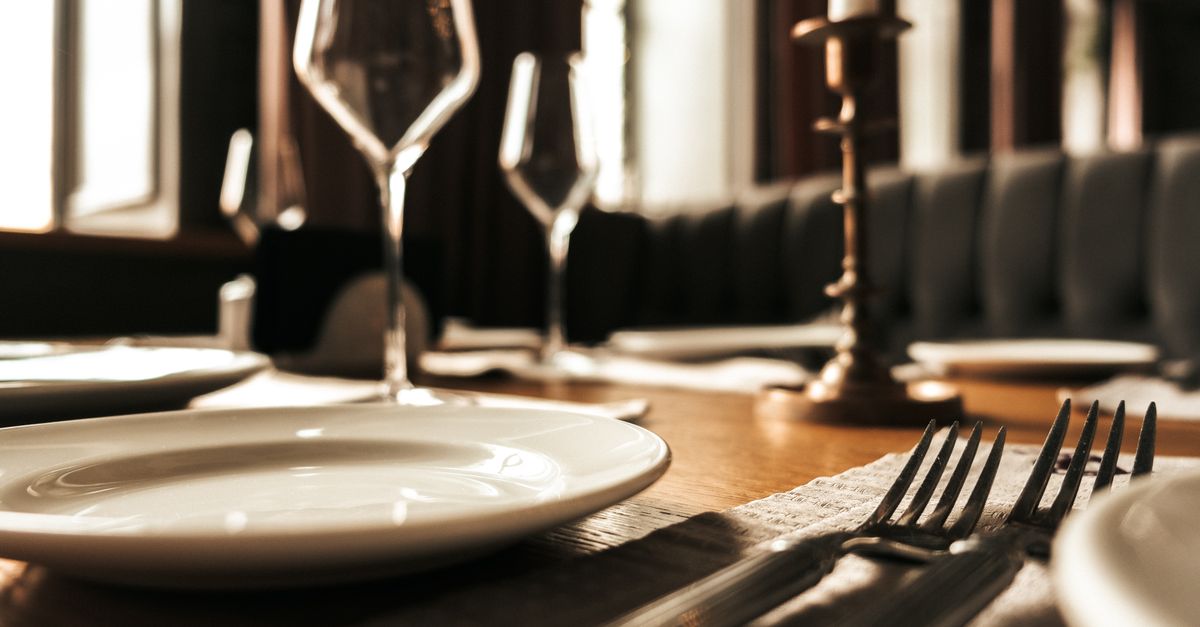
The fork rule (work from outside in, toward the plate) exists so you know which utensil matches which course without asking. At a proper afternoon tea, you’d have a small fork for pastries, maybe a different one for savory bites. Outermost first means you never grab the wrong one. The rule prevents confusion, then it became a test: someone who knows which fork to use signals education and social fluency. Both Emily Post and Debrett’s cite this as one of the few rules that remains consistent across formal dining contexts worldwide.
The don’t-blow-on-your-tea rule sounds prissy until you realize afternoon tea is served cooler than breakfast tea—specifically so it’s drinkable without cooling tricks. The point is conversation. Blowing on tea, dunking biscuits loudly, clinking the spoon against the cup: all these draw attention to eating instead of talking. The rule is about sound, not snobbery.
Afternoon tea traditions started as a class marker

The whole ritual was invented around 1840 by Anna Maria, Duchess of Bedford, as a “bridge” meal between lunch and a fashionably late dinner (often served at 8 or 9 p.m.). The Victoria & Albert Museum documents this origin in its collections on Victorian social history: the Duchess complained of a “sinking feeling” in the late afternoon and began requesting tea and light snacks in her private rooms. The practice caught on among her friends, then spread throughout aristocratic circles.
It wasn’t a necessity. It was a luxury: the time to stop, the imported tea, the pastries, the china, the fact that you weren’t working at 4 p.m. on a weekday. BBC History notes that by the 1880s, afternoon tea had become a social institution among the British upper and middle classes, complete with elaborate tea gowns and calling cards.
The tradition spread downward through British society, and as it did, the rules became more elaborate—because rules are how you prove you belong. If you know to put the teaspoon on the saucer behind the cup (not in the cup, not on the table), you’ve been taught. You’ve been somewhere this matters. That’s the whole point.
Here’s the cleverness, though: breaking rules deliberately can signal even higher status than following them perfectly. Someone who uses the wrong fork with total confidence is performing casual elegance, which is harder than formal correctness. Etiquette became theater. You’re not just following a script; you’re showing you know the script well enough to improvise.
The British vs. American divergence
The terminology flipped when afternoon tea crossed the Atlantic. In Britain, “high tea” was the working-class evening meal—meat, bread, vegetables, served at a high (dining) table around 5–7 p.m. “Afternoon tea” was the upper-class light affair with pastries and finger sandwiches.
In the U.S., “high tea” somehow became synonymous with fancy afternoon tea. It’s a complete inversion of the class associations. The Emily Post Institute acknowledges this American usage while noting the British distinction. Walk into an American hotel advertising “high tea” and you’ll get delicate sandwiches and scones, which a British person would find genuinely confusing. The same words, opposite meanings. It’s a reminder that etiquette adapts to culture—it’s not frozen in Victorian England; it’s alive and shifting.
The rules are taught but rarely enforced
Most formal tea services today—The Ritz, Claridge’s, the kind of place where afternoon tea costs £75 a person—are more relaxed than the written rules suggest. Milk-first or milk-last? Modern guidance from both Debrett’s and Emily Post says either is fine, though historically milk went in after tea to avoid cracking delicate china (a real concern with early porcelain). Sugar before or after? Personal preference.
The real rule, the one that persists across all modern etiquette guides, is this: don’t make noise, and don’t draw attention to your eating. Everything else has softened. Afternoon tea etiquette survives as cultural knowledge—something you learn—rather than something that gets you corrected at the table. There’s a gap between what people think they should know and what’s actually practiced, and that gap is where etiquette lives now.
What it means for you
If you ever find yourself at a formal afternoon tea, here’s what actually matters: relax your pinky, work from the outside fork in, keep your napkin on your lap, and don’t blow on the tea. Almost everything else is flexible.
But here’s the deeper thing: etiquette rules are smarter than they look. They started as solutions (how do we eat hot soup quietly? how do we signal we’re not done eating?) and became signals (this person knows the code). The strange rules for afternoon tea aren’t arbitrary. They’re a language that still works, even when we’ve mostly stopped speaking it out loud.
If you’re curious about other gesture-based etiquette myths, how to hold a wine glass covers similar ground—what we think is proper vs. what actually is. For a deeper dive on place settings and functional utensil logic, when to use which fork goes into why the rules exist. And for broader context on how British and American table manners diverged, british vs american table manners explores that split.
The pinky thing will probably keep circulating as “common knowledge.” But now you know: the most famous rule is the one that was never true.