
In Regency England, you couldn’t just finish your soup. You had to tilt the bowl away from yourself and spoon the last bit away from your body, or risk being marked as uncultured. The rule appears in A New System of Domestic Cookery (1806) and later in Beeton’s Book of Household Management (1861)—actual codified instructions, not folk wisdom. It sounds fussy, but there was a reason: soup dripping on your lap meant you didn’t know what you were doing.
Most etiquette rules weren’t random. They were gates—ways to mark who belonged and who didn’t. But here’s the useful part: the rules that survived into modern life are the ones with functional logic underneath. The ones that disappeared were pure status enforcement, useful only as long as the rigid social structure that held them up stayed intact. Learning to tell the difference gives you a framework for understanding which modern manners will stick and which are already dissolving.
1. You needed a different fork for every course
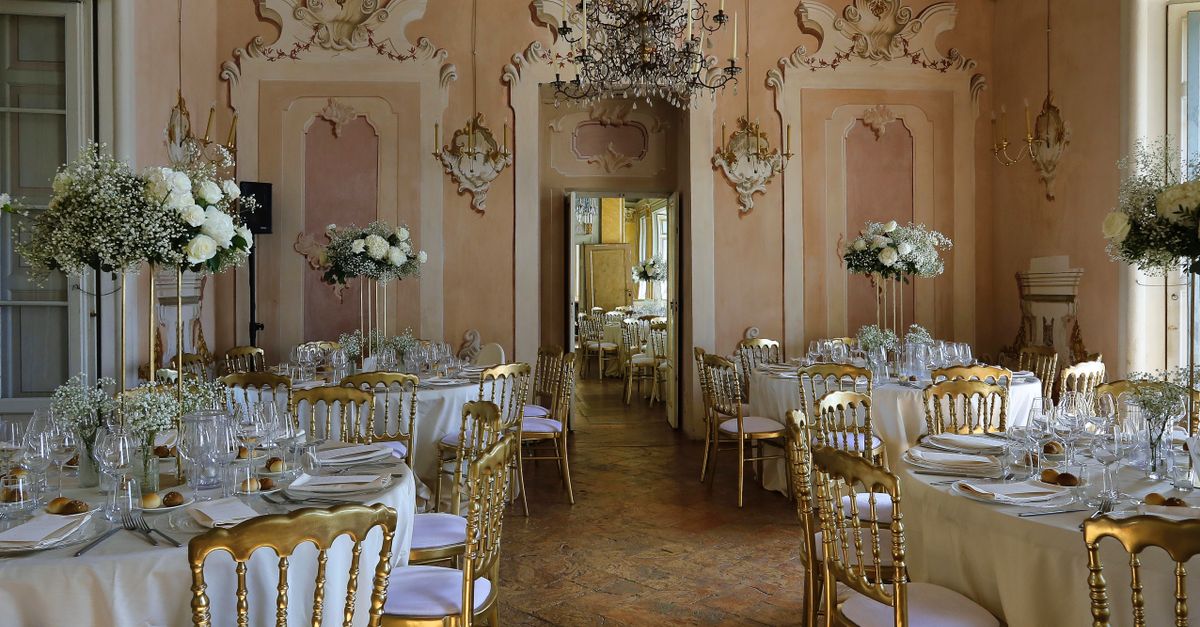
Fork specialization formalized in French court etiquette around the 1650s, then spread to Britain and intensified through the Victorian era. By the 1880s, an upper-class table setting included fish fork, salad fork, dessert fork, oyster fork, and more. Knowing which one to use wasn’t about function—it was about proving you belonged. The proliferation of specialized utensils was a wealth display. Only rich households could afford multiple sets, and only people raised in those households knew the order without being taught. If you reached for the wrong fork, everyone at the table knew you were faking it.
The system was a trap, and it worked—until it didn’t. As the Emily Post Institute notes, most of this has collapsed into “work from the outside in,” but the basic idea survives at formal dinners: the silverware is still a test, just a shorter one.
Functionality filter: Pure status enforcement. The fork hierarchy disappeared when the social structure that required constant class signaling weakened.
2. Soup spoons had to tilt away from you
This one sounds ornamental, but it’s actually functional, and it’s still the rule at formal dinners. In Regency etiquette, codified in household manuals by 1806, you tilted the soup bowl away from yourself and spooned the soup in an outward motion. Why? Because tilting toward you meant drips on your lap, and drips meant you didn’t know what you were doing. The rule appears in Smithsonian Magazine discussions of Victorian dining as one of the few table manners with genuine practical reasoning. It survived because the logic survived.
Functionality filter: Practical logic. This rule persists precisely because it prevents visible accidents, not because it signals class.
3. Arms off the table—or you might be armed
In medieval Europe, keeping your hands visible on the table was a precaution. Arms above the table, palms visible, meant you weren’t reaching for a weapon. It was a dinner-table version of showing your hands during a truce. Over centuries, the violence-prevention rule became a posture rule, then a politeness rule, and the original reason got forgotten. Now it’s just “good manners,” enforced in some households and ignored in others.
But if you’ve ever been told to sit up straight and keep your elbows in, you’re following a rule that started as medieval threat assessment. The transition from “prove you’re unarmed” to “prove you’re well-bred” happened slowly, with the original function fading but the gesture remaining.
Functionality filter: Started practical, became pure performance once the threat environment changed.
4. Unmarried women couldn’t go anywhere alone
Even into the early 20th century, respectable unmarried women needed chaperones for nearly everything. Visiting a male friend’s home? Not alone. Walking through certain parts of town? Not alone. Taking a trip? Absolutely not alone. The rule wasn’t about safety—it was about reputation and control. A woman seen unchaperoned could be considered “forward” or morally suspect, which could ruin marriage prospects.
The rule started relaxing in the 1920s and 1930s as women entered the workforce and cities became more common spaces, but in strict households it lingered far longer. Importantly, this wasn’t a universal human rule—it was specific to European and American upper-class culture, and British colonial administrators exported it as a marker of “civilization,” often imposing it on colonized populations where different gender norms had existed for centuries.
Functionality filter: Pure social control. Collapsed when women’s economic participation made enforcement impossible.
5. Children stayed silent at the dinner table

“Children should be seen and not heard” wasn’t just a saying—it was enforced policy in upper-class households through the 1950s. Kids either ate earlier in the nursery or sat silently at the adult table, speaking only if directly addressed. Dinner was for adult conversation, and children were considered disruptive and uncivilized. The rule reflected a broader belief that children needed to be trained into adulthood, not included in it.
As family culture shifted toward child-centered households in the postwar era, the silent-child rule faded, but traces of it remain in “inside voice” enforcement and the expectation that kids won’t interrupt. According to History.com, this reflected Victorian-era beliefs about childhood as a stage requiring strict behavioral shaping rather than developmental support.
Functionality filter: Status enforcement disguised as pedagogy. Faded when childhood became valued differently.
6. Thank-you notes had to arrive within 48 hours
In the Victorian era, a late thank-you note was a visible slight. The rule was simple: if someone gave you a gift or hosted you for dinner, your written thanks had to arrive within two days. Speed of response was a marker of respect and social priority—essentially, “I care enough about you to drop everything and write this immediately.”
The rigidity faded as postage slowed and lives got busier, but etiquette guides still push for timely notes. The modern standard is two weeks, not two days, but the underlying expectation—you owe a written acknowledgment—is a direct descendant of those old rules. The shift in timeline reveals the difference between the functional core (acknowledging generosity) and the status-performance layer (proving you prioritized the sender above all else).
Functionality filter: Mixed. The acknowledgment itself is functional social reciprocity; the 48-hour deadline was pure performance.
7. Men’s hats came off indoors, but only sometimes
The rule about men removing hats indoors has medieval roots: knights removing helmets showed their face and intent, a sign of peace and respect. Over time, this became codified as etiquette, but with status-based exceptions. Hats came off in the presence of women or social superiors, but stayed on in lower-status spaces like shops or taverns. The rule still exists in pockets—courtrooms, churches, formal dinners—but it’s become almost invisible in everyday life.
Younger people often don’t know it until they’re corrected, which makes it a quiet class marker: the people who know, know. Like many etiquette rules, it started with a practical signal (I’m not concealing my identity or intent) and hardened into a gesture whose meaning most people have forgotten.
Functionality filter: Started practical (visibility = trust), became a status test once helmets disappeared.
8. You couldn’t talk about money, health, or religion

Victorian conversational etiquette had forbidden topics: money, personal health, and religion were considered rude in mixed company. The idea was that polite conversation should be pleasant and neutral, avoiding anything that might embarrass or divide. But “polite” really meant “safe for people who don’t know each other well and don’t want conflict.”
Modern dinner conversation has shifted the boundaries—health talk is common now, but politics has taken religion’s place as the new third rail. The rule didn’t disappear; it just moved. We’re still policing conversational boundaries; we’ve just redrawn the map. The underlying function (avoid rupturing social cohesion) remains; the specific topics change with what each era considers divisive.
Functionality filter: Functional social lubrication. The topics shift, but the boundary-drawing survives.
9. Fork and knife placement told the server you were done
This one never died—it just became invisible. In Regency and Victorian dining, the way you placed your fork and knife on your plate was a silent signal to servants. Crossed utensils or knife placed across the fork meant “I’m still eating.” Fork and knife placed parallel, handles at four o’clock, meant “I’m finished.”
The code is so embedded that servers at formal restaurants still read it and act on it. If you’ve ever had a server hesitate to take your plate because your fork was at the wrong angle, you were speaking a 200-year-old language without knowing it. The Emily Post Institute still teaches this as standard practice—one of the clearest examples of functional etiquette outlasting its original context.
Functionality filter: Pure function. Silent communication in a noisy room. Survived because it still works.
The colonial export of “proper” behavior
Here’s what the standard etiquette history leaves out: these weren’t just British or European rules that evolved in isolation. By the 19th century, British colonial administrators were exporting etiquette as a weapon. Knowing which fork to use or how to write a calling card became a marker of “civilization,” imposed on colonized populations as proof of cultural superiority. In British India, East Africa, and the Caribbean, local elites were expected to adopt European table manners, clothing codes, and social rituals to be considered “respectable” by colonial standards.
This wasn’t cultural exchange—it was cultural erasure with silverware. Indigenous etiquette systems, often more complex and region-specific than European ones, were dismissed as primitive or nonexistent. The result: what we now call “traditional etiquette” is really one culture’s rules, enforced globally through imperial power. When those rules finally started to collapse in the mid-20th century, it wasn’t just because they were fussy—it was because the political structure that made them mandatory had weakened.
How we ranked these
We focused on strange etiquette rules from history with genuine depth and clear reasons behind them—either functional, like the soup-spoon tilt, or socially strategic, like the fork hierarchy. We skipped the purely bizarre-for-clicks rules in favor of the ones that reveal how etiquette worked as a system of control and belonging. The “functionality filter” framework—distinguishing practical logic from pure status enforcement—helps explain why some of these rules have direct descendants in modern manners while others vanished entirely when the social structure that held them up collapsed.
What happened to the rules that disappeared
The hyper-specific ones—48-hour thank-you notes, silent children, mandatory chaperones—died when the enforcement structure died. You can’t maintain a rule that requires servants, rigid gender roles, or a small closed social circle if those things stop existing. The ones that survived either had practical logic underneath (soup tilting, utensil signals) or were vague enough to adapt (conversational taboos, basic table posture).
Etiquette didn’t vanish; it became a language spoken fluently by fewer people, which makes it even more powerful as a marker of who belongs. Some of these rules live on in country clubs, law firm dinners, and diplomatic gatherings—invisible to most of us until we stumble into them.
Why did people follow such strict etiquette rules?
Because etiquette was a gate. In the 18th and 19th centuries, when new wealth emerged—railroad fortunes, industrial money—old-money families invented more rules to keep newcomers from looking respectable. Mastering the “right” behavior proved you belonged to polite society. Strictness was the point. The rules also served as colonial enforcement tools, marking who was “civilized” and who wasn’t in imperial contexts.
Which old etiquette rules are still followed today?
Soup-spoon tilting (away from you), fork-and-knife placement to signal you’re finished, hats off indoors in formal settings, and the general principle of not discussing divisive topics at dinner. These survived because they either have practical logic (preventing spills, silent communication) or serve ongoing social functions (conflict avoidance). The arbitrary status-performance rules mostly died.
What were Victorian table manners like?
Victorian table manners were highly codified and appeared in published household manuals like Beeton’s Book of Household Management (1861). They included waiting for the hostess to begin eating, using specific utensils for specific foods (formalized from earlier French court rules), tilting the soup bowl away to finish, placing utensils in precise positions to signal whether you were done, and maintaining specific postures. Many were designed to separate the socially trained from pretenders. The system was at its most elaborate in the 1880s–1900s, then began simplifying in the early 20th century.
Want more historical “wait, really?” moments? We’ve covered why we shake hands, why clocks run clockwise, and why we say “bless you” after sneezes—all with the same mix of function and forgotten power moves.