
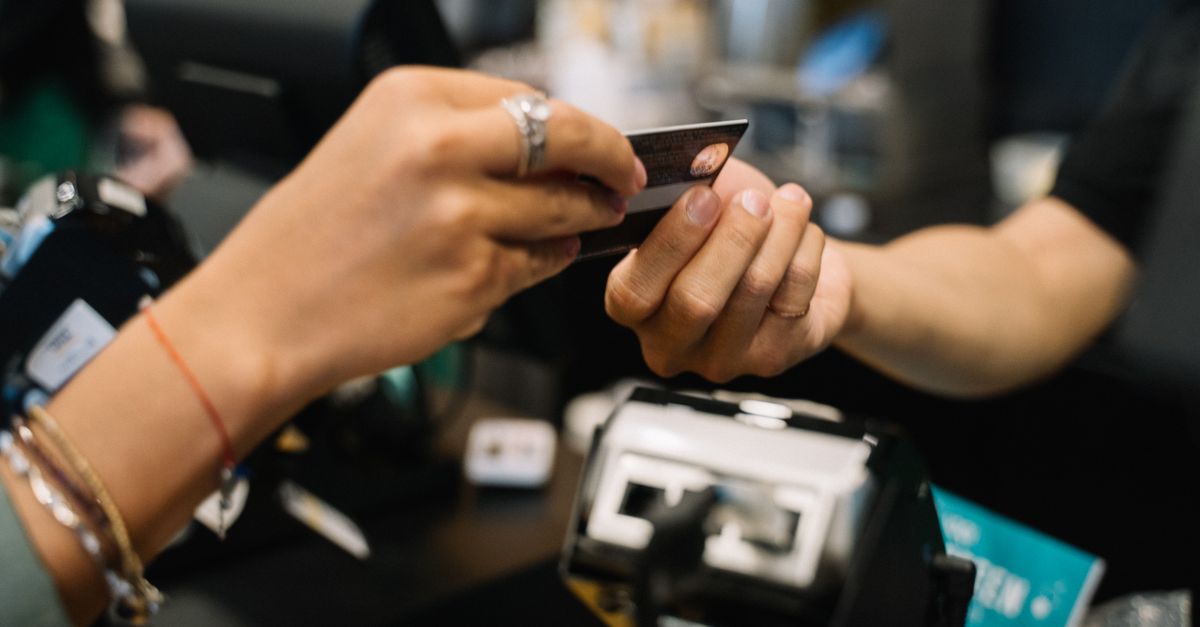
A hundred years ago, Americans thought tipping was un-American. Newspapers denounced it as a European aristocratic custom with no place in a democracy. Anti-tipping leagues formed. States tried to outlaw it. And yet here we are—locked in a system where servers depend on customer guilt to survive, and we’re all mildly uncomfortable every time the card reader spins around. Here’s how we got here, and why it’s so hard to leave.
The short answer
Tipping came from 18th-century European service culture, was initially rejected in America as undemocratic, then adopted by employers after the Civil War as a way to avoid paying full wages—especially to formerly enslaved workers and immigrants. By the 1930s, it was embedded in federal law. Now it’s a trap: the federal tipped minimum wage hasn’t budged from $2.13 since 1991, while median server earnings have declined in inflation-adjusted terms. Customers foot the bill instead of employers.
It started in Europe—and America wanted no part of it
The word “tip” probably doesn’t come from “To Insure Promptitude,” despite what you’ve heard at brunch. Most etymologists trace it to 17th-century slang meaning “to give” or “to hand over.” The practice itself formalized in Georgian-era Britain, where servants in wealthy households collected gratuities—from the Latin gratia, meaning favor—as a supplement to their wages.
Colonial Americans encountered tipping when traveling abroad and largely despised it. The practice struck them as servile, aristocratic, and fundamentally un-American. If all men were created equal, why should service workers grovel for spare change? Early U.S. culture rejected tipping on principle.
Then employers realized they could use it to pay less
Everything changed after the Civil War. Labor shortages, waves of European immigration, and the collapse of slavery created a service economy that needed workers—and employers who wanted to keep wages low. Wealthy Americans returning from Europe brought tipping into upper-class dining culture. By the 1890s, it was spreading to hotels, restaurants, and Pullman railroad cars.
Here’s the part that explains why tipping persists: employers realized they could treat tips as part of a worker’s income. If customers would pay servers directly, business owners could lower base wages. It wasn’t an accident. It was a cost-shifting strategy, and it worked.
The racial dimension is impossible to ignore. Tipping became institutionalized in service roles disproportionately filled by Black workers after Reconstruction and immigrant laborers. Employers explicitly kept wages low, making tips essential. Southern restaurant owners, in particular, lobbied hard to preserve the system.
The law locked it in place—and the numbers tell the story

When Congress passed the Fair Labor Standards Act in 1938, establishing a federal minimum wage, they carved out a specific exemption for “tipped employees.” This wasn’t an oversight. It was deliberate. Southern employers pressured lawmakers to keep tipping legal so they wouldn’t have to pay servers a living wage.
The federal tipped minimum wage was set at $2.13 per hour in 1991. It has not increased since. Regular minimum wage has risen multiple times; the tipped minimum has stayed frozen for 33 years.
The numbers make the trap visible. According to Bureau of Labor Statistics data, median earnings for food servers (including tips) hover around $29,000 annually—but that figure masks extreme regional variation and relies entirely on tipping remaining consistent. Adjusted for inflation using Federal Reserve data, the purchasing power of that $2.13 base wage has eroded by more than 40% since 1991. Servers today depend on tips to bridge a gap that grows wider every year.
Some states broke ranks—but most didn’t
The 1960s and 70s saw organized pushback. Labor activists and civil rights groups questioned why service workers had to rely on customer charity instead of fair wages. Some restaurants experimented with no-tipping models, raising menu prices and paying servers a flat hourly rate.
Almost none of those experiments stuck. Restaurant margins are thin. Owners had no incentive to raise wages if customers would tip anyway. Customers, meanwhile, balked at higher menu prices even when told it was to pay workers fairly. The psychology of tipping—the sticker price looks lower, even though you pay the same or more in the end—proved too powerful to dislodge.
But the last decade has seen real policy divergence. California, Oregon, Washington, Nevada, and a handful of other states now require employers to pay the full state minimum wage regardless of tips—no separate tipped minimum. Research from the Economic Policy Institute and Cornell’s School of Industrial and Labor Relations shows servers in those states earn higher total wages without reducing employment. Ballot measures in additional states are active as of 2026. Tipping isn’t settled policy anymore; it’s contested ground.
Servers themselves remain divided. In high-end restaurants, tips can far exceed any plausible hourly wage. In casual dining, the calculus shifts.
The interesting wrinkle: tipping is now everywhere

Digital payment systems like Square and Toast introduced tip prompts to contexts that never had them before. Coffee shops. Grab-and-go counters. Retail checkouts. Self-serve frozen yogurt shops. You can now be prompted to tip before your food is even picked up by a delivery driver you’ll never see.
This isn’t evolution; it’s metastasis. The infrastructure of tipping—originally built to subsidize server wages in full-service restaurants—has spread because the technology makes it frictionless. A tablet can ask for a tip in contexts where social norms haven’t caught up. The result is consumer backlash, viral social media posts, and a rising sense that tipping has gotten out of hand.
Most of the world figured this out differently
Australia requires a statutory minimum wage regardless of tips and bans mandatory tip pooling. The UK’s National Minimum Wage applies to all workers; tips are extra, not essential. Canada and France have higher base wages for service workers. Japan has almost no tipping culture at all. Menu prices are higher in these countries, but the total cost to diners is similar—it’s just transparent.
America frames tipping as generosity, but it’s actually a way to keep menu prices artificially low while outsourcing labor costs to customers. We’re uncomfortable with it because we’re being asked to make up for a wage gap that shouldn’t exist. Servers are uncomfortable because their rent depends on strangers’ moods. Employers benefit because they pay less. Everyone else loses.
The recent backlash—Shake Shack and other chains testing higher wages and no-tipping models—suggests the system might finally be cracking. But change is slow. Tipping is embedded in federal wage law, restaurant economics, and cultural expectation.
FAQ
Where did tipping originate?
Tipping formalized in 18th-century Britain as a way for servants in wealthy households to earn extra income. The term “gratuity” comes from Latin gratia, meaning favor or thanks. Americans initially rejected the practice as un-American.
Why is tipping an American thing?
Post-Civil War labor dynamics and European immigration patterns brought tipping to the U.S., where employers quickly adopted it to lower base wages. By the early 1900s, it was normalized in restaurants and hotels. Other countries didn’t make the same policy choices—most now guarantee statutory minimum wages regardless of tips.
Is tipping legally required?
No. Tipping is a social expectation, not a legal obligation. However, in states where servers earn the federal tipped minimum wage ($2.13/hour), tips are effectively required for workers to earn a livable income. Some states have eliminated the separate tipped minimum entirely.
Why hasn’t the tipped minimum wage increased?
The federal tipped minimum wage of $2.13/hour has been frozen since 1991 due to restaurant industry lobbying and political inertia. Some states have higher tipped minimums or require full minimum wage regardless of tips, but most workers still depend on tips to survive.
The next time the card reader spins around and you feel that familiar flicker of guilt, know this: you’re subsidizing a wage structure other developed countries abandoned decades ago. The guilt isn’t misplaced. The system earned it.