
Pizza is everywhere now — every strip mall, every airport, every corner of the globe. We treat it as comfort food, celebration food, apology food. But here’s the thing most people miss: for most of its history, pizza was what you ate when you couldn’t afford anything better. It was street food made from scraps, sold to laborers who ate it standing up. The history of pizza is the story of how the world’s poor invented something so good that everyone else eventually wanted it too.
The short answer
Pizza as we know it — flatbread topped with tomatoes and cheese — emerged in Naples, Italy, in the late 1700s. Tomatoes had recently arrived from the Americas, and Naples’ dense poor population combined them with an ancient Mediterranean flatbread tradition. There was no single inventor; pizza evolved gradually through generations of home cooks and street vendors.
The flatbread foundation
Flatbreads with toppings go back millennia. Pliny the Elder documented Roman soldiers eating panis focacius — flatbreads topped with olive oil, cheese, and herbs — in the first century. Similar traditions existed across the Mediterranean: focaccia in Liguria, pissaladière along the French Riviera, countless unnamed variations baked in home ovens and sold on street corners.
Where did pizza come from isn’t a story about invention. It’s a story about adaptation. The genius wasn’t creating flatbread with toppings; that already existed. The genius was what Naples did when tomatoes showed up.
Why Naples, and why then

Tomatoes arrived in Europe from the Americas around the 1520s, but Europeans were slow to trust them. Many thought they were poisonous. Northern Europe remained skeptical for centuries. But southern Italy — especially Naples — eventually gave them a chance, partly because the poor didn’t have the luxury of being picky.
By the mid-1700s, tomatoes were common in Neapolitan home gardens. The city was crowded, dense, and deeply poor. Bread was cheap. Tomatoes were cheap. Street vendors called pizzaioli started selling flatbreads topped with tomato, garlic, oil, and whatever else was on hand. It was filling, it was fast, and it cost almost nothing. This is how pizza was invented: not in a kitchen or a royal court, but on the street, by people solving the problem of hunger with what they had.
The first documented recipes for tomato-based pizza appear in early 1800s cookbooks, including Ippolito Cavalcanti’s La Cucina Teorico-Pratica in 1837. By then, pizza was already a Neapolitan staple — Cavalcanti was just writing down what everyone already knew how to make.
What Naples didn’t invent: regional variations
Here’s what the standard history leaves out: Naples didn’t invent the only pizza, just the most famous one. The whole Italian peninsula had its own flatbread traditions, and they didn’t all look like the round, sauce-centered disk we think of today.
In Rome, pizza al taglio — pizza by the slice — is thin, rectangular, and sold by weight. You point at a section, they cut it with scissors, weigh it, hand it over. Toppings range from potato and rosemary to zucchini blossoms. In Sicily, sfincione is thick and spongy, topped with onions, tomato sauce, breadcrumbs, and anchovies. Liguria’s focaccia is older than any of them — oiled, salted, sometimes dimpled with olives or onions, baked in wide pans and eaten throughout the day.
Pizza wasn’t one Neapolitan invention that spread. It was a Mediterranean flatbread adaptation that happened in parallel across regions, each shaped by what was local and cheap. Naples got the credit because Naples was where poverty, density, and street-food culture collided at the exact moment tomatoes became trusted. But the idea that there’s one true lineage — that all pizza descends from a single Neapolitan prototype — erases the variety that existed all along.
The class journey
For most of the 1800s, pizza stayed in Naples. It wasn’t Italian food; it was Neapolitan food, and specifically poor Neapolitan food. Wealthier Italians didn’t eat it. Tourists didn’t seek it out. It was what laborers bought from street carts for a few coins.
Then came mass Italian immigration to the United States between 1880 and 1920. The bulk of these emigrants came from southern Italy — Naples, Sicily, Calabria, Campania — regions where poverty and limited land drove people to leave. These weren’t the artisans or merchants of the industrial north; these were the rural and urban poor, and they brought their food traditions with them. Neapolitan pizza — not the northern Italian cuisine of risotto and polenta — became the template for American pizza because southern Italians were the ones baking it.
They settled in urban enclaves — New York, New Haven, Chicago, Boston — and opened bakeries and pizzerias that served their own communities. Lombardi’s in New York, often credited as the first American pizzeria, opened in 1905. For decades, pizza remained ethnic food, eaten almost exclusively by Italian immigrants and their children.
The shift happened after World War II. American soldiers returning from Italy had developed a taste for pizza. Pizzerias began appearing in non-Italian neighborhoods. By the late 1950s and early 1960s, chains like Pizza Hut and Domino’s were standardizing and mass-marketing pizza to suburban America. A food invented by the urban poor and carried by immigrants became the most popular food in the country.
The interesting wrinkle

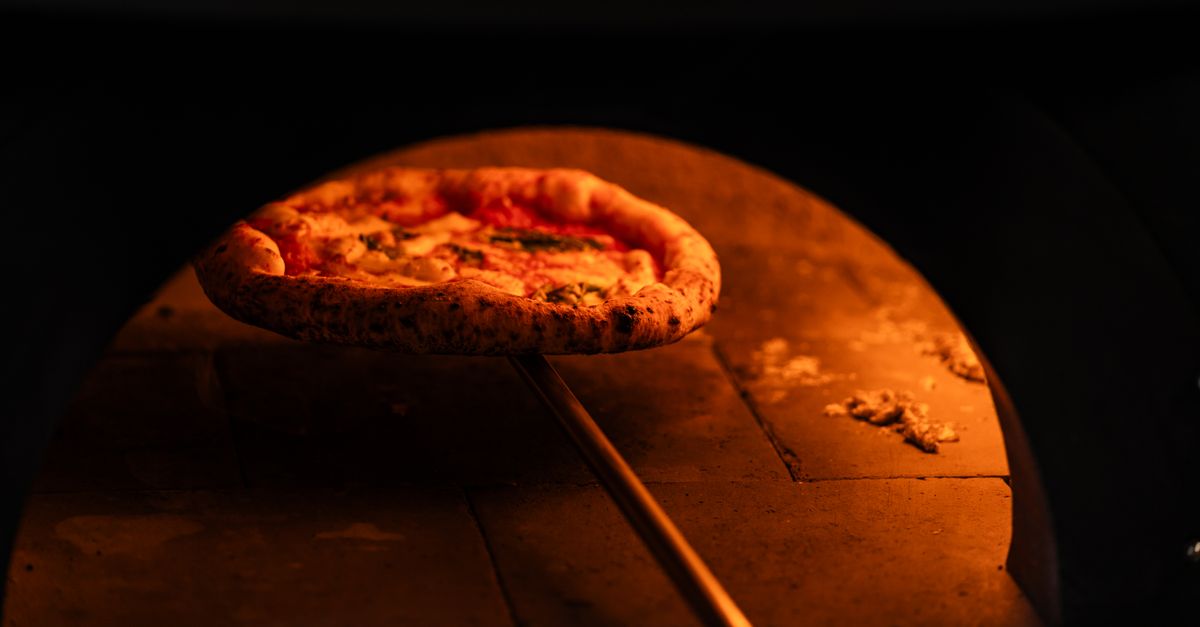
Here’s what gets left out of most histories: the idea of “authentic” pizza is shockingly recent. Neapolitan pizza was legally defined in 1984 by the Associazione Verace Pizza Napoletana, which set strict rules — wood-fired oven at 485°C (905°F), San Marzano tomatoes, mozzarella di bufala or fior di latte, sea salt, specific kneading and stretching techniques, bake time under 90 seconds. In 2009, the European Union granted Traditional Speciality Guaranteed (TSG) status to Neapolitan pizza, locking those standards into law across Europe.
That means the standards for “true” Neapolitan pizza are younger than the Happy Meal. For centuries before that, pizza was whatever a home cook or street vendor decided to make. There were no rules because there was no prestige. The rules came later, once pizza became something worth protecting and selling as heritage.
The famous Queen Margherita story — that pizza Margherita was created in 1889 for the Italian queen, with red tomato, white mozzarella, and green basil to represent the flag — lacks strong historical evidence. Food historians are skeptical. Pizza Margherita probably existed as a simple, affordable option before 1889; the royal visit may be real, but the origin story feels like the kind of myth a food develops once it becomes important enough to need one.
What it means for how we think about food
Pizza wasn’t a gift from culinary geniuses. It was built by people solving a problem — how to eat well with almost no money — and accidentally creating something so good that the whole world eventually wanted it. That’s not a lesser origin. That’s a better one.
FAQ
When was pizza invented?
Flatbreads with toppings go back to ancient Rome. Tomato-based pizza emerged in Naples in the late 1700s, with documented recipes appearing by the early 1800s. There’s no single invention date because pizza evolved gradually.
Who invented pizza?
No single person. Pizza evolved in Naples through generations of home cooks and street vendors who combined tomatoes with the Mediterranean’s existing flatbread tradition. The name likely comes from the Italian verb pinsere, meaning to stretch or flatten.
Why is pizza Italian?
Tomatoes are native to the Americas and arrived in Europe in the 1500s, but southern Italy’s climate, poverty, and willingness to experiment made Naples the place where tomatoes and flatbread combined into what we now call pizza. The tradition stayed largely Neapolitan until Italian immigration spread it globally.
Where did pizza originate?
Naples, Italy. The city’s dense poor population, access to tomatoes, and existing flatbread culture created the conditions for pizza to emerge as cheap, filling street food in the 1700s. It remained regional for over a century before spreading.
How did pizza become popular?
Italian immigration to the U.S. in the late 1800s and early 1900s brought pizza traditions to cities like New York and Chicago. It remained ethnic food until after World War II, when American soldiers returning from Italy popularized it. Pizza chains in the 1950s and 60s made it mainstream.
The next time you’re eating pizza, remember: you’re eating something that was invented because people had no money and a lot of hunger.