

I still have a drawer in my desk where a Motorola Razr used to live next to an iPod Mini and a tangle of white earbuds that cost $29 to replace every time the wire frayed. That drawer is empty now—not because I cleaned it out in some Marie Kondo purge, but because everything in it became completely obsolete in about five years.
This isn’t a story about bad gadgets. The Razr was a status symbol. The BlackBerry was how executives worked remotely. The iPod was how an entire generation carried music. Then the iPhone arrived in 2007, Android followed in 2008, and by 2012 the entire ecosystem had been erased. What’s striking isn’t that these gadgets failed; it’s how fast they went from must-have to museum piece—and what that speed reveals about how platform shifts actually work.
1. Motorola Razr — The Phone That Was Actually a Fashion Statement
The Razr V3, released in June 2004, wasn’t the best phone you could buy. It was the phone you wanted people to see you using. At 0.55 inches thick, it was the slimmest phone in the world for two years, and Motorola priced it like jewelry—over $500 at launch. By 2005 it had sold 50 million units; by the time production ended in 2010, that number hit 130 million.
The Razr died because it was a mechanical answer to a software problem. The iPhone didn’t win by being thinner; it won by having a touchscreen, an app store, and the entire internet in your pocket. Motorola tried to chase Apple with touchscreen Razrs in 2008, but by then the brand had already started to feel like a relic. Fashion moves faster than technology, and the Razr was always more fashion than tech.
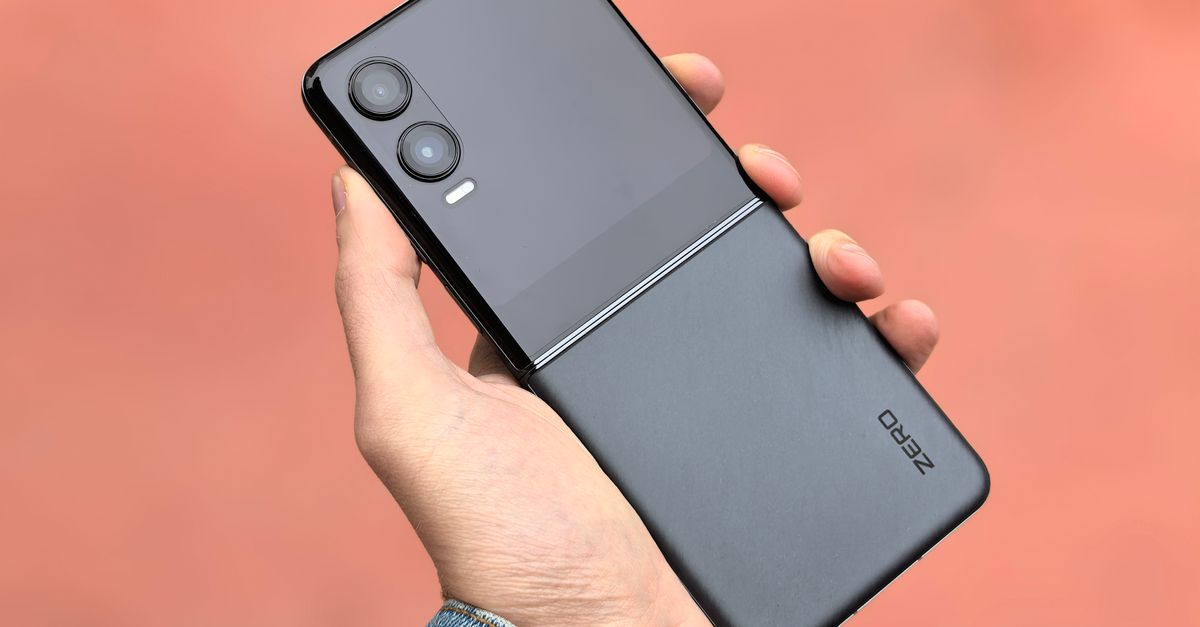
Here’s the twist: flip phones came back. Motorola relaunched the Razr as a foldable smartphone in 2019, and Samsung’s Galaxy Z Flip became a genuine hit by 2023. Form-factor obsolescence isn’t permanent—what matters is which platform controls the value. The Razr failed when it was a dumb phone trying to compete with a smartphone. It works now because it is a smartphone that happens to fold.
2. BlackBerry — The Device That Lost to Free Messaging
Research In Motion’s BlackBerry peaked in 2009 with nearly 50% of the U.S. smartphone market, according to IDC’s historical mobile platform data. The physical keyboard was faster than touchscreen typing. The push email was instant when everyone else’s mail client refreshed every 15 minutes. And BlackBerry Messenger—BBM—was the original closed-loop messaging app that made teenagers feel like they were part of an exclusive club.
Then two things happened: SMS became unlimited on most U.S. phone plans by 2010, and WhatsApp launched the same year with free messaging over data. The iPhone had already proven that touchscreen keyboards were good enough, and suddenly the BlackBerry’s entire value proposition evaporated. By 2013, BlackBerry’s market share had collapsed to under 1%. The company that invented push email couldn’t compete with apps that made messaging free and platform-agnostic.
3. Flip Phones in General — Cool to Cringe in 24 Months
Flip phones weren’t just one model; they were an entire category. Samsung, LG, Kyocera, Motorola, Sony Ericsson—everyone made them between 2003 and 2008 because they solved a real problem: accidental pocket-dialing. Closing the phone protected the screen and ended the call. It felt good to snap one shut after a conversation. Tactile, final.
The flip form factor died faster than almost any other category of obsolete technology. In 2007, flip phones accounted for roughly 25% of all mobile phone sales globally. By 2012, that number was under 2%. The switch wasn’t gradual—people didn’t ease into touchscreens. Once the iPhone and early Android phones proved that apps mattered more than durability, carrying a flip phone became a signal that you were stuck in 2005. By 2010, flip phones had gone from cool to embarrassing with almost no middle ground.
4. Apple iPod and the Entire MP3 Player Ecosystem
The iPod dominated the 2000s so thoroughly—holding around 70% of the digital music player market between 2004 and 2008—that it’s easy to forget the gadget itself is completely extinct now. Apple discontinued the last iPod model in May 2022, but the format had been dying since 2010 when the iPhone absorbed its function. The iPod Touch lingered as a budget iOS device for kids whose parents didn’t want to give them a phone. The original iPod, the one with the click wheel, was already a nostalgia object by 2012.
What killed it wasn’t just convergence—it was streaming. The iPod was a file-carrying device. You owned the music; you synced it from iTunes; you carried it. When Spotify, Pandora, and Apple Music made access more valuable than ownership, the entire premise of a dedicated music player became a category error. Why carry a second device when your phone has every song ever recorded?
The same fate hit every iPod competitor: Microsoft’s Zune, Creative Zen, SanDisk Sansa, iRiver. All gone by 2015.
5. Microsoft Zune — The Music Player Everyone Forgot Existed
The Zune deserves its own entry because it’s the purest example of a gadget that was erased so completely that most people don’t realize it ever existed. Microsoft launched it in 2006 as an iPod competitor with a bigger screen, Wi-Fi sharing, and integration with the Xbox ecosystem. It sold an estimated 2 to 3 million units total. The iPod sold over 100 million in the same window.
The Zune wasn’t bad—it was late, redundant, and launched into a market that was about to stop existing. By 2012, Microsoft had quietly discontinued it and pivoted the brand name to Xbox Music (which also no longer exists). The Zune is the Museum of Failed Tech’s star exhibit: a competent product that arrived at exactly the wrong moment and left no cultural footprint.
6. PalmPilot and Pocket PCs — The Original Pocket Computers

Before smartphones, if you wanted a portable calendar, contact list, and note-taking device, you carried a PDA: a Personal Digital Assistant. The PalmPilot dominated the late ’90s and early 2000s with its stylus-based interface and desktop syncing. Microsoft’s Pocket PC platform (running Windows Mobile) competed for the business-user market with devices from HP, Dell, and Compaq.
By 2008, both were dead. The iPhone and Android phones absorbed every single function a PDA provided—calendar, contacts, email, notes, third-party apps—and added a phone and a camera. There was no reason to carry two devices. Palm tried to pivot with the Palm Pre in 2009, a smartphone with webOS that was genuinely innovative. It didn’t matter. The market had already moved on, and Palm was acquired by HP in 2010, then shut down a year later.
7. Compact Digital Cameras — When Your Phone Got Good Enough
The Canon PowerShot. The Sony Cyber-shot. The Nikon Coolpix. If you went on vacation between 2003 and 2010, you carried one of these in a dedicated camera pouch with a wrist strap. They were small enough to be portable, good enough to replace film for most people, and cheap enough—$150 to $400—that they became a standard household gadget.
Smartphone cameras killed them by becoming good enough. The original iPhone had a 2-megapixel camera that was pretty bad. By 2010, the iPhone 4 had a 5-megapixel camera with an LED flash and basic editing. That was enough for vacation photos, Instagram, and spontaneous moments. Compact camera sales peaked around 2010 and fell off a cliff by 2013. The category still exists for enthusiasts, but for most people, carrying a separate camera became one more thing they didn’t need to pack.
8. Handheld Gaming — PSP and Game Boy Advance
Sony’s PlayStation Portable (PSP) launched in 2004 and sold around 80 million units before being discontinued in 2014. Nintendo’s Game Boy Advance had an even earlier peak, fading after the Nintendo DS arrived in 2004. Both were legitimate successes in their time—but the iPhone’s App Store in 2008 introduced a new category: casual mobile gaming that was free or 99 cents, always in your pocket, and didn’t require carrying a second device.
Dedicated handheld gaming didn’t die entirely—the Nintendo Switch proves there’s still a market—but the necessity of it vanished. The PSP was for people who wanted console-quality games on the go. The iPhone was for people who wanted something to do while waiting in line. The second group was much, much larger.
The Pattern: Why Single-Function Devices Don’t Survive Platform Shifts
Every gadget on this list died for the same structural reason: it offered one valuable function on a closed platform, and then a new platform absorbed both the device and the function. The iPod played music; the iPhone played music and did everything else. BlackBerry had secure messaging; iMessage and WhatsApp had free messaging and ran on any phone. The Razr looked good closed; the smartphone did everything the Razr did plus the entire internet.
This is the warning pattern. Closed ecosystems built around a single value proposition are structurally vulnerable when a more open platform can absorb what they do and add ten more things on top. It’s not about better hardware—it’s about which platform controls access to the next layer of value. According to Statista’s mobile device market data, the smartphone adoption curve between 2007 and 2012 was one of the fastest technology transitions in consumer history, specifically because convergence eliminated the need to carry multiple devices.
The speed of collapse proves the point. These weren’t gradual declines—they were five-year eliminations. The Razr peaked in 2006 and was functionally dead by 2011. BlackBerry held 50% market share in 2009 and under 1% by 2013. The iPod was discontinued fourteen years after the iPhone launch, but it had been irrelevant since 2010. When the platform shifts, the old category doesn’t decline—it just stops being necessary.
The real shock isn’t that these gadgets failed—it’s that they were essential one year and obsolete three years later. That drawer in my desk isn’t a museum; it’s a reminder that “indispensable” is always temporary when you’re betting on a platform that only does one thing. The tech graveyard occasionally gives things back—but only if they join the winning platform first.